Cite this as: Florjanowicz, P. 2026 'Looking Back to Move Forward – The Benefits of Researching Archaeological Archives for Policy Making Today', Internet Archaeology 72. https://doi.org/10.11141/ia.72.12
Archaeological archives constitute a fundamental source of knowledge not only regarding prehistory but also in relation to the development of archaeology as a discipline and the ways in which it has been institutionalised and managed over time. The study of these archives, be it policy documents, legal acts, memoirs or private letters, is therefore indispensable for understanding the historical trajectory of archaeological policy and for situating contemporary practices within their broader intellectual and administrative context. Memoirs and private correspondence of leading archaeologists — most of which remain unpublished and are preserved in academic or museum archives, as well as in the private collections of their heirs — constitute particularly valuable sources for the study of the history of heritage policy. These materials offer insight into the behind-the-scenes dynamics of decision-making processes and reveal the underlying motivations for the establishment, or absence, of specific policy priorities. By examining archival evidence, one can trace the evolution of archaeological policies, identify the motivations behind specific decisions, and assess the impact of these decisions on the present state of the discipline. Such inquiry prompts critical reflection: do the reasons that once shaped archaeological priorities remain relevant today? Are contemporary policies addressing ongoing challenges, or are they instead relics of past concerns, disconnected from the present needs of archaeology and heritage management? A historical understanding of these dynamics is crucial for navigating the current position of archaeology in Poland.
Although academic convention typically dictates that conclusions should follow analysis, it is important in this case to establish from the outset the current situation of Polish archaeology. At present, Poland lacks a coherent national policy for archaeology, and the field remains largely marginalised within broader heritage strategies — where such strategies exist at all. A telling example of this neglect is the absence of a national archaeological museum. While such an institution was originally established in the 1920s, it never attained the prominence or recognition of comparable institutions in other European countries. Since the 1990s, its position has weakened further, particularly following the administrative reform of 1999, when the museum was downgraded to the status of a regional institution, thereby severing its direct connection with the Ministry of Culture and National Heritage.
The neglect of archaeology is also evident in the Polish education system. Prehistoric knowledge is virtually absent from school curricula, reduced to superficial references to iconic sites such as Biskupin, without meaningful integration into the broader narrative of Polish history, which traditionally begins with the adoption of Christianity in 966 CE. Consequently, public awareness of archaeological heritage remains limited.
This lack of awareness undermines the effectiveness of legal protections. While Polish law ostensibly provides strong safeguards for archaeological sites, their implementation is hindered by the absence of public support. Many citizens fail to recognise the value of archaeological heritage and therefore perceive strict regulations as unnecessary or excessive. As a result, metal detecting and other forms of treasure hunting are widely tolerated and even regarded by some as socially beneficial activities. The absence of accessible knowledge on prehistory in education, popular culture and public discourse has created a vacuum that is increasingly filled by pseudo-archaeology, including the proliferation of fringe theories such as the so-called Great Lechia or Turboslav narratives.
In the digital era, gauging public perception is often facilitated by artificial intelligence tools that synthesise collective associations. When asked 'what archaeology in Poland is most commonly associated with', ChatGPT in 2025 usually produced a variation on the following responses:
Of these associations, the first and last merit particular attention, as the remaining items largely mirror perceptions prevalent across Europe. A noteworthy exception is the enduring impact of the Indiana Jones films in Poland, which were first released in the 1980s during a period of political repression and social stagnation. Against this backdrop, the figure of Indiana Jones captured the imagination of the Polish public, symbolising adventure, independence, and the pursuit of knowledge. The character's popularity not only shaped the popular image of archaeologists but also inspired a generation of students to pursue archaeology as a potential means of transcending the hopelessness of late communist reality.
To address the question of why archaeology in Poland is primarily associated with Egypt and why sites such as Biskupin occupy a central place in public consciousness, it is necessary to situate the discussion within the historical context of modern Poland. Unlike many western European countries, where the development of archaeology was closely supported by nascent nation-states seeking to construct and legitimise national myths, archaeology in Poland did not benefit from similar state patronage.
In western Europe, the pursuit of archaeological knowledge was often framed as a tool for establishing unique national identities. Discoveries from prehistory could be interpreted as evidence of the distinctiveness of one ethnic group from another, thereby supporting political and cultural claims. Archaeology was thus embraced as an instrument of state-building and was generously funded and promoted.
Poland, however, experienced a markedly different trajectory. Following the loss of independence in the late 18th century, the Polish–Lithuanian Commonwealth was partitioned among three neighbouring empires — Russia, Prussia and Austria — and effectively erased from the political map for over a century. The occupying powers were generally indifferent or actively hostile towards the preservation and promotion of Polish national identity, including its archaeological heritage. As a result, the development of archaeology in Poland had to proceed largely independently of state support and without the political incentives that guided research elsewhere in Europe. Consequently, Polish archaeology evolved in a context that was relatively free from political influence, yet simultaneously constrained by the absence of institutional and financial backing.
Following the restoration of Polish independence in 1918, the newly reconstituted state was finally able to establish a national legal and policy framework for the protection of cultural heritage. Remarkably, the measures adopted at this time were considered advanced for their era, anticipating principles that today would be recognised as sustainable heritage management.
For example, a brochure published in 1920 by the ministry responsible for heritage protection (Ministerstwo Sztuki i Kultury 1920) outlined the state's commitment to safeguarding archaeological and historical sites. This early policy framework not only reflected an awareness of the value of cultural heritage but also demonstrated a proactive approach to its preservation, signalling a significant shift from the constraints of the partition period. It is worth mentioning that the brochure was 'rediscovered' and republished in early 2000s (along with an English translation), to remind heritage authorities of the 21st century of this proactive tradition in Polish heritage policy creation, and encourage them to continue on this path:
… Yet what are monuments, if not outward signs of the past?
Historical monuments of art and culture link the past with the future. They are witnesses to the history of humanity. They tell us about the feeds of our ancestors, their lives, their endeavours, and their tastes …
Historical monuments are the precious possessions of the entire nation. No single generation has the right to consider it solely their exclusive owner. It is merely their provisional depositary … (Ministerstwo Sztuki i Kultury 1920).
In the field of archaeology, the State Archaeological Museum was established in Warsaw in 1928, with the explicit mission of serving as the central national authority responsible for the protection of archaeological heritage. The museum's approach to archaeological materials — whether recovered through systematic excavations or discovered accidentally — was notably progressive for its time. Importantly, this approach was designed to be independent of political or ideological influence, reflecting the principles articulated in the 1920 ministry brochure:
The value of an excavation lies not in that it is an extraction of individual objects from the soil. It usually gains significance after all the circumstances that accompanied the discovery of the objects have been investigated and recorded, i.e.: the topography of a locality, the geological layer, the positioning, the distribution, and the mutual relation of the objects, etc. (Ministerstwo Sztuki i Kultury 1920).
In the aftermath of independence, the re-established Polish state faced the immense task of reconstructing governmental institutions and legal frameworks in all fields. As a result, archaeology received little political attention; it operated largely autonomously, free from external pressures but also without sustained institutional support. In contrast, during the same period, archaeology in Germany — particularly under the rise of the Nazi regime in the 1930s — garnered significant state interest, though this engagement was closely tied to the promotion of ideological agendas.
Polish archaeologists closely observed the activities of their German colleagues, who systematically exploited archaeological research to justify claims of ethnic superiority and national expansion, even prior to the formal rise of Nazism. Polish scholars were highly critical of these practices, as evidenced by their extensive engagement in publishing analyses, reviews and proposals for improvement. An examination of research periodicals from the inter-war period reveals that even individuals occupying official positions within public administration were willing to articulate their views openly, including opinions that were sharply critical of the authorities or the prevailing legal framework, both in Poland and abroad. As noted by Professor Roman Jakimowicz, founder of the State Archaeological Museum, in 1929:
The protection of prehistoric monuments can only have one purpose, a purely scientific one. All other goals must be relegated to the background or eliminated altogether, as they not only have nothing to do with science, but even directly discredit it. I mean primarily political goals … Only impartial achievements of prehistory can and sometimes do have a certain political significance. But it can never be the goal of prehistory and cannot exert its influence on the direction of research, as is the case in certain countries (Jakimowicz 1929).
Another prominent figure in Polish archaeology, Professor Józef Kostrzewski — widely regarded as a founding father of modern Polish archaeology, and a former student of Professor Gustaf Kossinna in Berlin — was highly critical of the ways in which German prehistorians aligned their research with political objectives. Kostrzewski condemned the exploitation and overinterpretation of scientific findings to serve nationalist agendas. As he reflected in his memoirs:
We Poles do not need to rely on archaeological arguments at all, since both historical and ethnographic evidence speak too clearly in our favor. Therefore, from a political point of view, we may be indifferent to what nationality the prehistoric population of Poland or the then eastern Germany represented, especially since at best they were Germans of Scandinavian origin, and not the ancestors of Germans. However, as long as German prehistorians continue to file claims to Polish lands based on archaeological research, we will be forced to repel their attacks with scientific weapons (Kostrzewski 1970, 171).
At the same time, Kostrzewski recognised the potential of archaeology to support political claims and actively sought to incorporate archaeological findings into arguments countering Nazi propaganda. This was a challenging endeavour, as he perceived that neglecting archaeology represented not only a missed opportunity to safeguard cultural heritage through public engagement, but also a potential threat to Poland's geopolitical standing.
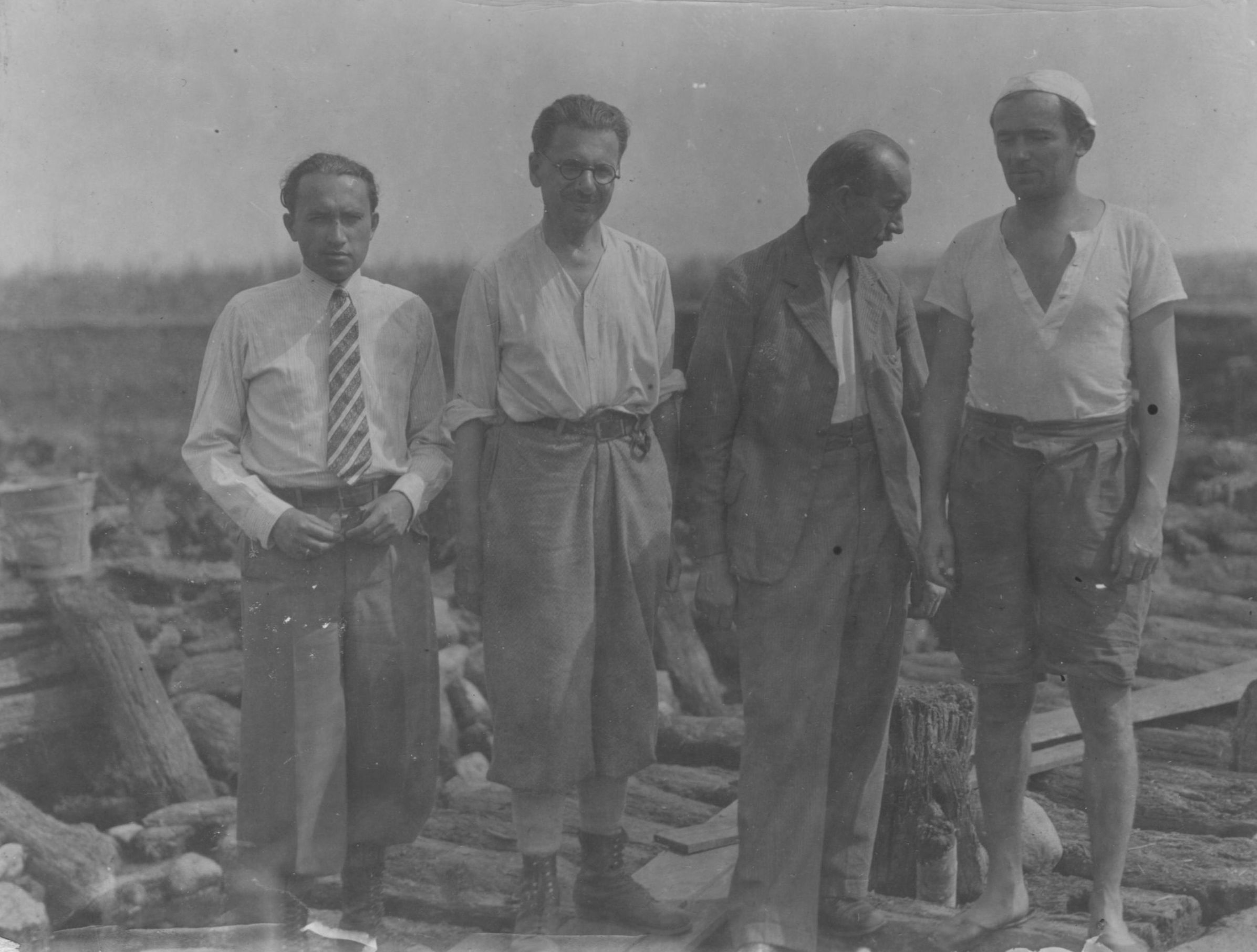
To address this, Kostrzewski transformed the Iron Age fortified settlement at Biskupin into a state-of-the-art laboratory for the application of contemporary archaeological excavation techniques, and established it as a model archaeological site. He strategically leveraged Biskupin to counteract aggressive German Nazi narratives concerning prehistory, demonstrating the capacity of rigorous scholarship to serve national interests. Kostrzewski was also highly effective in promoting the site nationally; by 1939, it is estimated that approximately 100,000 visitors had come to Biskupin, reflecting its significance both as a research centre and as a tool of cultural diplomacy.
With the outbreak of the World War II and the German invasion of Poland on 1 September 1939, organised looting of Polish cultural heritage began almost immediately. Archaeology was not exempt from this process. The Nazi regime sought to legitimise such actions by constructing a false narrative that projected onto Poles the very practices of politicising archaeology in which German scholars themselves were engaged.
One of the key figures in this ideological enterprise was Wolfram Sievers, secretary general of the Ahnenerbe, a pseudo-scientific organisation established to promote Nazi racial ideology by asserting the supposed superiority of the Aryan race. In a letter addressed to Heinrich Himmler on 10 September 1939, Sievers wrote:
Poland, which was re-established as a result of the world war, was aware of the importance of prehistory and early historical times from the very beginning ... The specific task of Polish science was to defend the 'Proto-Slavic theory', that is, to provide evidence that the Slavic culture arose together with the 'Lusatian' culture, i.e. in the Early Bronze Age, and persisted for over 3,000 years, despite various foreign accretions (Mężyński 1994).
Nazi archaeologists also initiated excavations at the site of Biskupin in an effort to substantiate claims of its alleged Germanic origins. When these investigations failed to produce supporting evidence, the project was soon abandoned. More broadly, the German approach to occupied Poland, including in the academic sphere, was fundamentally colonial in nature — characterised by exploitation and destruction rather than any form of cooperation. Polish scholars and academics, deemed by the occupiers to belong to an inferior race, were systematically excluded from participation. At the same time, Polish society, archaeologists included, universally rejected and condemned collaboration with the Nazi regime (Florjanowicz 2023; 2024).
Following the German invasion, Poland was also attacked from the east by the Soviet Union on 17 September 1939. The Soviet authorities adopted a markedly different strategy in the occupied territories, promoting a false image of a peaceful transition to the communist system and a semblance of continuity across social, cultural and academic life, including research conducted in universities and museums. In reality, however, Soviet rule was no less repressive than that of Nazi Germany. Tens of thousands of Poles — including women and children — were executed, deported to gulags, forcibly resettled, or imprisoned.
Both occupying regimes systematically targeted the Polish intelligentsia, who were perceived as potential leaders of resistance and as influential figures within the clandestine structures of the Polish Underground State. Among the scholars arrested in this period was Professor Leon Kozłowski, an archaeologist who was also a pre-war politician, former prime minister, and senator. Detained in Lwów (today Lviv, Ukraine) immediately after the Soviet entry, Kozłowski spent several years in Soviet prisons before being released. He subsequently travelled extensively across Soviet Russia, recording valuable observations in his memoirs. In these writings, he also reflected on the Soviet approach to academic life, which he regarded as fundamentally flawed and destined to fail:
In countries ruled by police methods, in countries where scientists must serve the official doctrine, science must decline and cannot develop. Beautiful buildings built in the Soviet Union for academies of sciences and scientific institutes, and huge funds allocated for scientific research will not create Soviet science until scientists are given the possibility of an independent and free judgment in the field of the subject under study and the freedom to choose the subject of research (Kozłowski 2001, 109).
Like all sectors of economic, cultural and social life, Polish archaeology suffered immense losses during World War II, under the dual occupation of Nazi Germany and Soviet Russia. The end of the conflict in 1945 did not, however, bring freedom and independence. Instead, Poland, along with other central and eastern European nations, fell within the sphere of influence of Stalin's Soviet Union. This new political reality posed significant challenges for archaeology, though some scholars initially perceived it as an opportunity. For a brief period, certain archaeologists sought to adapt to the changing circumstances and to exploit the westward shift of Poland's borders, in order to expand their research fields. As Zdzisław Rajewski, a student of Józef Kostrzewski prior to the war, observed in 1945:
The old lands returned to the motherland, and in them there were strongholds, graves, settlements and treasures — in short, buried Polishness. Therefore, the scope of responsibilities must expand to the west and north ... This irrefutable fact that we have been in these lands for centuries, and not since yesterday, must reach the hearts and brains of all, connect them with the old Polishness and give them spiritual strength and foundation of historical awareness (Rajewski 1945).
It soon became apparent to Polish archaeologists that advancement within the new political order depended less on scholarly merit than on ideological conformity and political loyalty. The discipline was quickly confronted with the harsh realities of totalitarian rule: the introduction of censorship, the pervasive fear of arrest for expressing views deemed inappropriate, and the emergence of individuals who actively supported the regime and were rewarded with academic positions and degrees through non-meritocratic means.
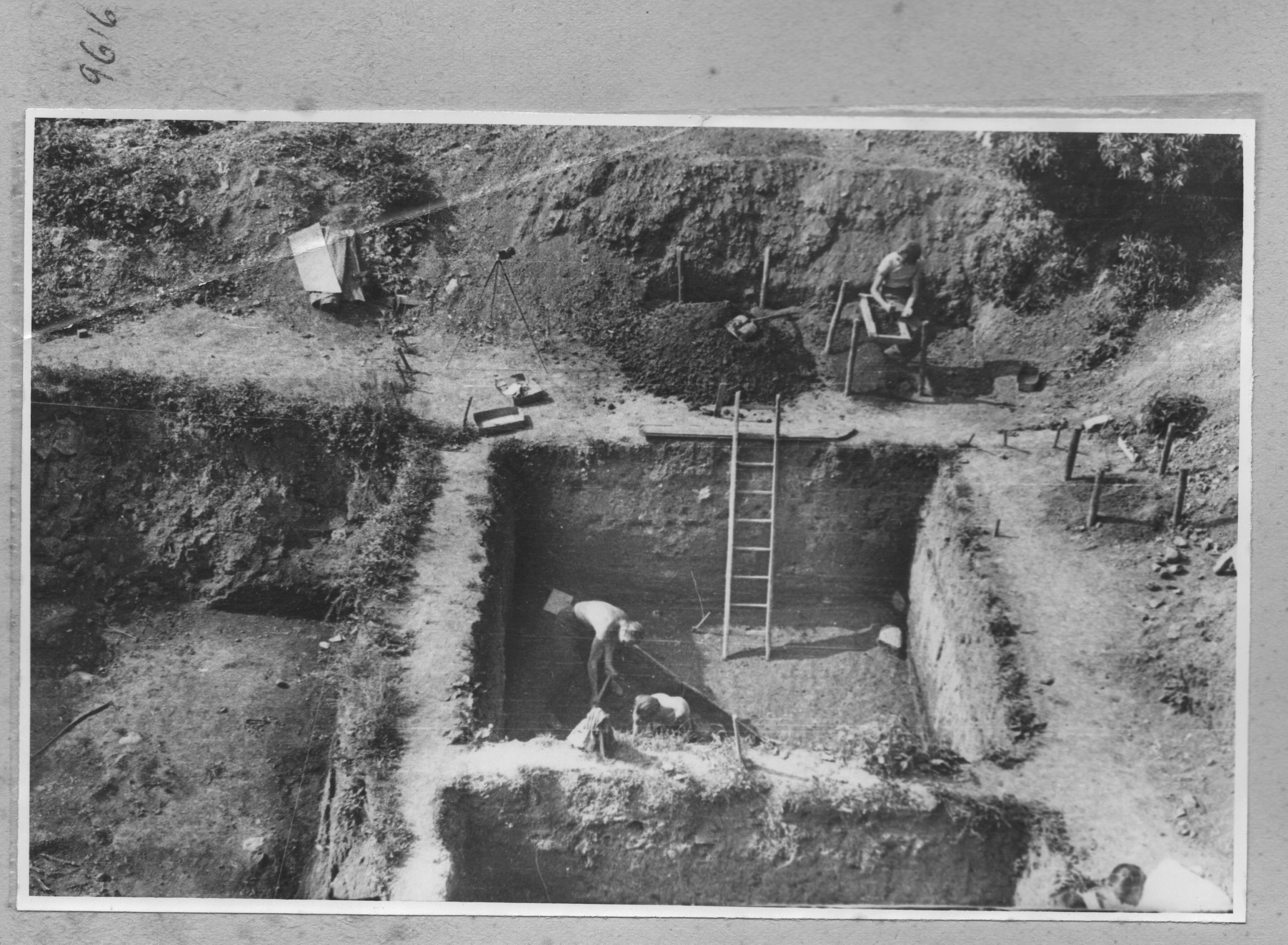
One such figure was Włodzimierz Hołubowicz, who advanced with unprecedented rapidity to become one of the leading, though also most controversial, archaeologists of his generation. While Hołubowicz was undoubtedly a talented researcher and methodologist — recognised as a pioneer in the ethnoarchaeology of pottery and in stratigraphic excavation techniques — he simultaneously gained notoriety as a ruthless academic, who used his political influence to undermine colleagues, in some cases ending their careers.
Following the political thaw of 1956, the Polish Association of Archaeologists formally accused Hołubowicz of threatening numerous colleagues, which had led in several cases to dismissals or even arrests. He was also accused of wartime collaboration with German authorities. The proceedings against him, extensively documented in the archives of multiple archaeological institutions — mainly private letters — reveal a remarkable degree of solidarity within the academic community, which sought to confront his abuses of power in the hope that the darkest period of political oppression had ended. Despite overwhelming evidence, however, the case was closed after 3 years without a verdict, under direct order from the communist authorities.
In 1962, Hołubowicz died unexpectedly of heart failure at the age of 54 while in Stockholm. Although his career had been marked by significant scholarly achievements, Polish archaeologists collectively refused to cite his work for decades. This practice of damnatio memoriae endured for nearly 30 years, persisting until the generation of scholars who had personally experienced his influence gradually left the academic stage (Florjanowicz 2023).
The experiences of Polish archaeologists under two totalitarian regimes — Nazi Germany and the Soviet Union — had a profound impact on the discipline's post-war trajectory. Having witnessed firsthand how archaeology was systematically exploited for ideological purposes, and following the unresolved case of Włodzimierz Hołubowicz, in which overwhelming evidence of misconduct was dismissed by the communist authorities without explanation, the archaeological community consciously chose to distance itself from politics. Scholars redirected their efforts exclusively toward empirical research and disengaged from any form of political or propagandistic application of their findings.
This deliberate withdrawal, however, carried unintended consequences. In an effort to avoid political entanglements, archaeologists refrained from drawing broader interpretative conclusions — whether ethnic, cultural, or even economic — that might be construed within a Marxist framework. As a result, archaeology became politically irrelevant but also increasingly insular. The discipline grew hermetic, accessible only to specialists, and gradually lost its connection with broader society.
In this intellectual vacuum, the figure of Kazimierz Michałowski emerged as the dominant force in shaping the public perception of Polish archaeology. A professor of classical archaeology — though he preferred the term 'Mediterranean archaeology' — Michałowski had been conducting excavations in Egypt prior to World War II. After enduring 6 years in a German prisoner-of-war camp, he returned to Warsaw and expanded his research ambitions. Significantly, he succeeded in persuading the communist authorities to integrate archaeology into their strategy of cultural diplomacy. His excavations in Egypt and other parts of the eastern Mediterranean coincided with the decolonisation of the region, during which newly independent states were seeking alliances within the Soviet sphere of influence.
Over the following decades, Michałowski consolidated his position as the preeminent authority in classical archaeology in Poland. His students came to lead nearly all university departments of the discipline, ensuring the dominance of his intellectual school. Equally important was his success in popularising archaeology. Through exhibitions, publications and media outreach, Michałowski captured public imagination, with the result that Polish society came to associate archaeology almost exclusively with Mediterranean antiquity. To this day, when Polish archaeologists identify themselves professionally, they are usually asked whether they have excavated the pyramids of Egypt.
In recent years, this perception has begun to shift, as prehistorians increasingly emphasise public engagement and the dissemination of their findings. Nevertheless, substantial work remains to be done in order to reestablish the visibility and significance of Poland's own archaeological heritage. At the same time, the historical experiences of the discipline demonstrate the dangers of political exploitation of archaeology, a lesson that should remain central to any future policy framework.
Based on this historical trajectory, several recommendations for heritage policy in Poland may be addressed to today's decision-makers:
Knowledge of the history of one's discipline constitutes an important resource for contemporary practice. Yet, historians and archaeologists alike have too often neglected to reflect on their own disciplinary past, to their own detriment. Encouragingly, recent years have seen a growing recognition of the importance of such reflexivity — a development that holds promise for both scholarship and professional practice.
Unfortunately, such a positive shift in approach is not evident among heritage policymakers at a national level. The existing legal framework remains outdated, and the division of legislation governing heritage inspection and museums hinders the effective promotion of the social value of archaeological heritage. At present, no comprehensive policy for archaeology exists, nor have there been meaningful efforts to engage diverse stakeholders in the policymaking process. The inclusion of archaeology within national policy frameworks should not be interpreted as politicisation; rather, it constitutes a necessary condition for ensuring the preservation of prehistoric heritage for future generations.
All translations of quotes in the text from Polish to English by Paulina Florjanowicz.
Internet Archaeology is an open access journal based in the Department of Archaeology, University of York. Except where otherwise noted, content from this work may be used under the terms of the Creative Commons Attribution 3.0 (CC BY) Unported licence, which permits unrestricted use, distribution, and reproduction in any medium, provided that attribution to the author(s), the title of the work, the Internet Archaeology journal and the relevant URL/DOI are given.
Terms and Conditions | Legal Statements | Privacy Policy | Cookies Policy | Citing Internet Archaeology
Internet Archaeology content is preserved for the long term with the Archaeology Data Service (ROR). Help sustain and support open access publication by donating to our Open Access Archaeology Fund.
 Home
Home