Cite this as: Lombaert, L., Desnerck, L., Marchal, C., Heynderickx, D. and Vandecatsye, S. 2026 'Chalking the Past: Participatory Archaeology Embedded in Community', Internet Archaeology 72. https://doi.org/10.11141/ia.72.9
Archaeological repositories in Flanders (Belgium) play a vital role in preserving and safeguarding archaeological heritage. Traditionally, their main task has been to store and protect collections, but their potential to engage the public remains largely untapped. This article expands upon the insights shared at the EAC 2025 Heritage Management Symposium, in the session 'Unlocking the potential of physical archaeological archives and the (changing?) role of modern archaeological repositories'. It takes a closer look at how repositories can evolve into dynamic places that foster education, participation, and community building, using Ename Heritage Site as a case study.
In Flanders, archaeological research is often seen as a procedural step in spatial development projects — a box to tick off before construction begins. Final excavation reports are usually delivered years later (Meylemans 2025), and rarely reach or resonate with the people who live on these historically rich sites. Urban plans are typically finalised before the excavations start, leaving little room to integrate archaeological discoveries into the design of new neighbourhoods. As a result, many residents live on top of centuries of history without ever knowing it.
This article explores how archaeological repositories, especially the one at Ename Heritage site, can help bridge that gap. Through outreach, education and participatory projects, they can transform archaeology from something hidden and passive into something visible, relevant and shared. The central question is: How do you reach people who don't know they're connected to a collection? With initiatives like Chalk the Past (Figure 1), the Ename repository shows that archaeology can be brought into the streets, schools and communities — making heritage not just accessible, but meaningful and connected to the present.
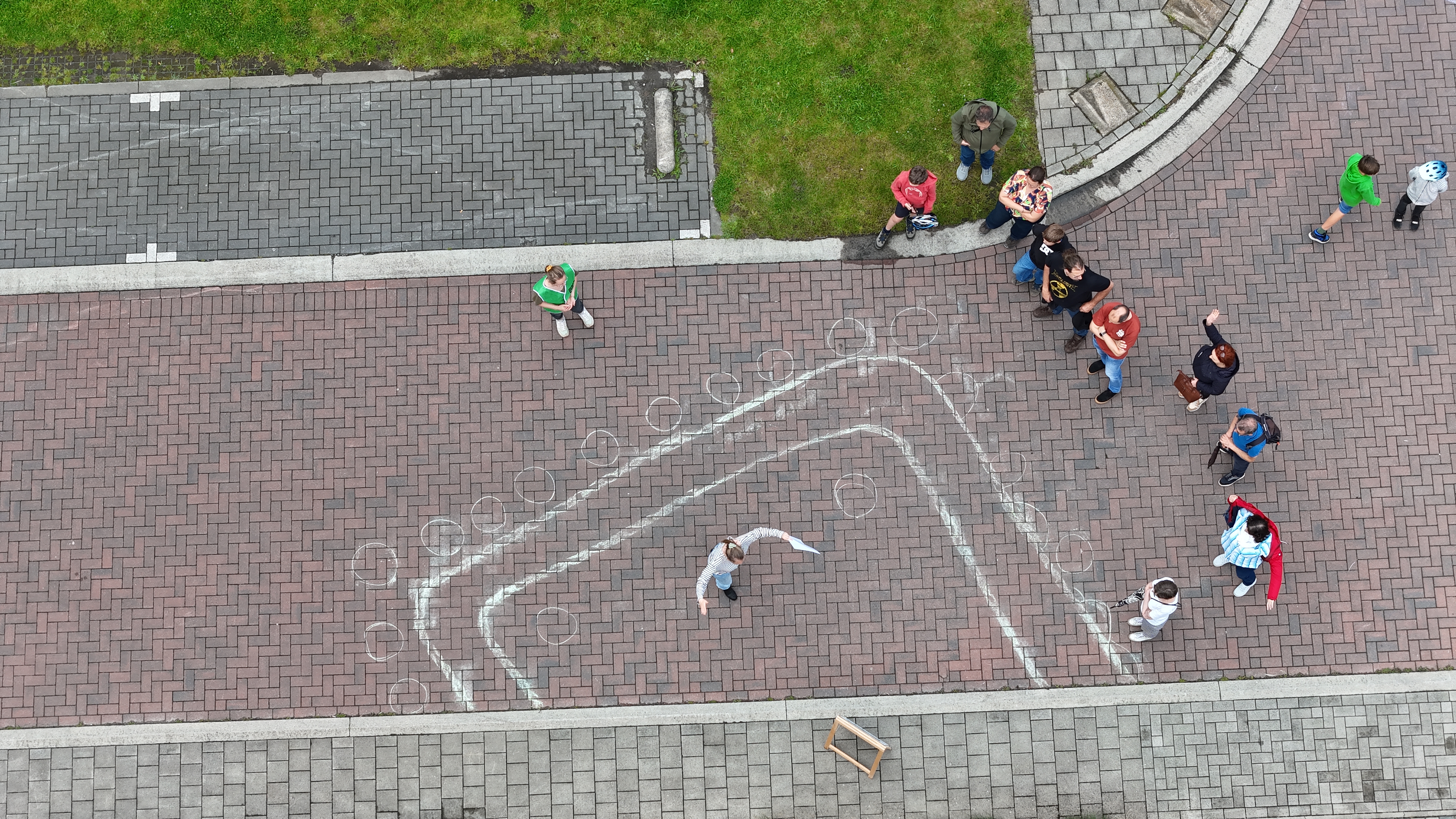
In Flanders, heritage is governed by a dual system that distinguishes between movable (in Dutch: roerend erfgoed) and immovable cultural heritage (in Dutch: onroerend erfgoed). This division, although artificial, is embedded in legislation and funding structures. Immovable heritage includes archaeological sites and collections, historic buildings, and landscapes. The Immovable Heritage Decree (Vlaams Parlement 2013) marked a turning point by legally recognising archaeological repositories (in Dutch: depot) for the first time (Martens 2015). Since then, 16 repositories have received official accreditation and funding, with a couple more in development.
Ownership of archaeological collections in Flanders is a complicated matter. According to the Belgian Constitution, the owner of the land also owns everything found on that property, including archaeological objects. This results in a fragmented system where collections are held by a wide range of stakeholders: private individuals, construction companies, schools, municipalities, and even nursing homes. According to The Immovable Heritage Decree, these owners are legally responsible for preserving the archaeological archive and making it accessible for research. They can either retain ownership of the collection (without clear guidelines for conservation) or transfer it to an accredited repository.
Despite the accreditation system, an ongoing study by the Flemish Heritage Agency (De Ketelaere in prep), presented at the Repository Network in 2024, indicates that less than half of all archaeological archives end up in accredited repositories. This poses significant challenges for long-term preservation and accessibility. Moreover, the dispersed and often poorly documented state of many archives contributes to a gradual devaluation of archaeological research itself. Incomplete or inaccessible datasets and collections hinder comparative analysis, replication of results, and the broader interpretation of regional historical patterns. In this sense, the lack of centralised curation not only affects the preservation of archaeological archives but also undermines the scientific integrity and cumulative value of archaeological knowledge in Flanders.
Nevertheless, over the last 10 years, the legislative framework and funding have led to a notable professionalisation of the sector in terms of archaeological collection management (Bauters and Lombaert 2019). Accredited repositories have hired and trained additional staff, addressed registration backlogs, and repackaged older collections to meet modern conservation standards. Infrastructure and storage conditions have also improved, with investments in climate control, pest management, and spatial reorganisation.
On the other hand, the current repository landscape in Flanders is characterised by considerable diversity. The 16 accredited depots vary significantly in terms of size, scope and public accessibility. Some are specialised archaeological facilities, while others also store parts of architectural heritage, collections from protected buildings such as churches or even genetic samples of heritage trees. A few repositories operate within larger institutions that also manage movable cultural heritage and archives.
Geographical coverage also differs widely: some repositories serve just two municipalities, while others cover nearly 60, despite receiving similar levels of funding. Public access ranges from closed storage facilities to repositories with integrated exhibition spaces or visitor centres. Some repositories function partly as emergency or temporary storage facilities with pest treatment infrastructure, while others include an integrated excavation service or restoration workshops.
This diversity reflects the decentralised nature of heritage management in Flanders, but it also underscores the need for coordination and shared standards. The Repository Network, established by the Immovable Heritage Decree, plays a key role in meeting those needs.
The Flemish Repository Network is not a formal association, but rather a collegial group of repository professionals who collaborate to improve the care and accessibility of archaeological collections. To ensure continuity and regular interaction, the network operates with an elected chairperson who facilitates meetings and coordinates activities. This informal yet purposeful setup allows the network to remain agile and responsive to sectoral needs, while maintaining a consistent rhythm of collaboration.
The primary mission of the Flemish Repository Network is to support and advise the broader heritage sector in the transfer of immovable heritage to repositories. Over the past years, this network has evolved into a central point of contact for both emerging repositories and heritage professionals seeking guidance on repository policy, collection care and collection intake procedures (De Langhe 2018).
One of the network's core functions is to act as a coach and advisor for new or aspiring repositories. Members share their expertise and experience — often gained through their own accreditation processes — to guide others through the complex journey towards official recognition. This peer-to-peer model has also proven particularly valuable in the context of developing new infrastructure for future repositories, where early-stage advice on storage design, energy efficiency and intake procedures can significantly improve long-term outcomes.
The network also provides tailored advice on transfer logistics, repository profiles and the challenges of matching archaeological collections with suitable repositories. By coordinating repository profiles across the region, the network helps to prevent further fragmentation of archaeological archives and promotes a more efficient and coherent repository intake system. This alignment is not only a practical necessity but also a legal requirement under the Immovable Heritage Decree.
Beyond the repository sector itself, the network serves as a resource for researchers and archaeological companies. Questions related to packaging, storage conditions and deposition procedures are regularly addressed through its meetings and communication channels. Moreover, repositories can offer valuable insights into the research potential of collections, making them strategic partners in synthesis studies and in formulating new research questions. The network allows stakeholders to reach all major receptive repositories in Flanders simultaneously and receive harmonised responses.
The network developed a digital inventory that enables research of collections housed across the accredited repositories. This tool not only improves accessibility for researchers looking for specific archaeological archives, but also functions as a monitoring instrument. It helps to identify which collections have successfully entered the repository system and, crucially, which part remains outside of it. These 'external' collections often remain in temporary or private storage, lacking professional conservation, documentation or long-term oversight. As a result, a substantial portion of Flanders' archaeological record is not actively monitored and falls outside the scope of formal heritage care, making it vulnerable to loss, neglect or irreversible decontextualisation. By visualising these gaps, the network gains insight into systemic issues and can better advocate for improved intake practices and policy adjustments.
Another key area is the standardisation of registration practices. The network has developed a shared intake template for archaeological companies, ensuring transparency and consistency in the delivery of archaeological archives. It also promotes best practices for internal registration and documentation within repositories.
The issue of selection strategy remains a contentious topic in the field. While the network has created a space for renewed dialogue on this matter, the legal requirement for repositories to remain receptive limits their ability to implement well-considered selection policies. Nevertheless, the network recognises the need for a long-term strategy and continues to explore this complex issue.
Communication and visibility are also central to the network's mission. For many years, repositories were seen as the silent end-point of the archaeological process. The network actively works to challenge this perception by positioning repositories as the beginning of a new trajectory for archaeological collections — one focused on accessibility, research and public engagement. Each accredited repository contributes to this effort within its own capacity, while the network amplifies these efforts at a supra-local level.
To reach a broader audience, the network has organised information sessions for archaeological companies and developed outreach materials for collection owners. These include brochures that explain the transfer process and direct stakeholders towards accredited repositories. Through these initiatives, the network not only supports the sector but also strengthens its own identity as a vital and visible actor in the heritage landscape.
The Ename repository (in Dutch: Erfgoeddepot Ename) is not a standalone facility — it is an integral part of Ename Heritage Site (Figure 2), operated by the Province of East Flanders. This site combines archaeological care, public engagement and nature conservation in a unique and layered context. The repository is housed in a purpose-built concrete structure (2008), located within a protected archaeological zone and nature reserve along the River Scheldt. It sits adjacent to the ruins of a Benedictine abbey and is embedded in a broader provincial vision for heritage care and education. Since 2015, the Ename repository has been officially accredited and receives annual structural funding from the Flanders Heritage Agency.
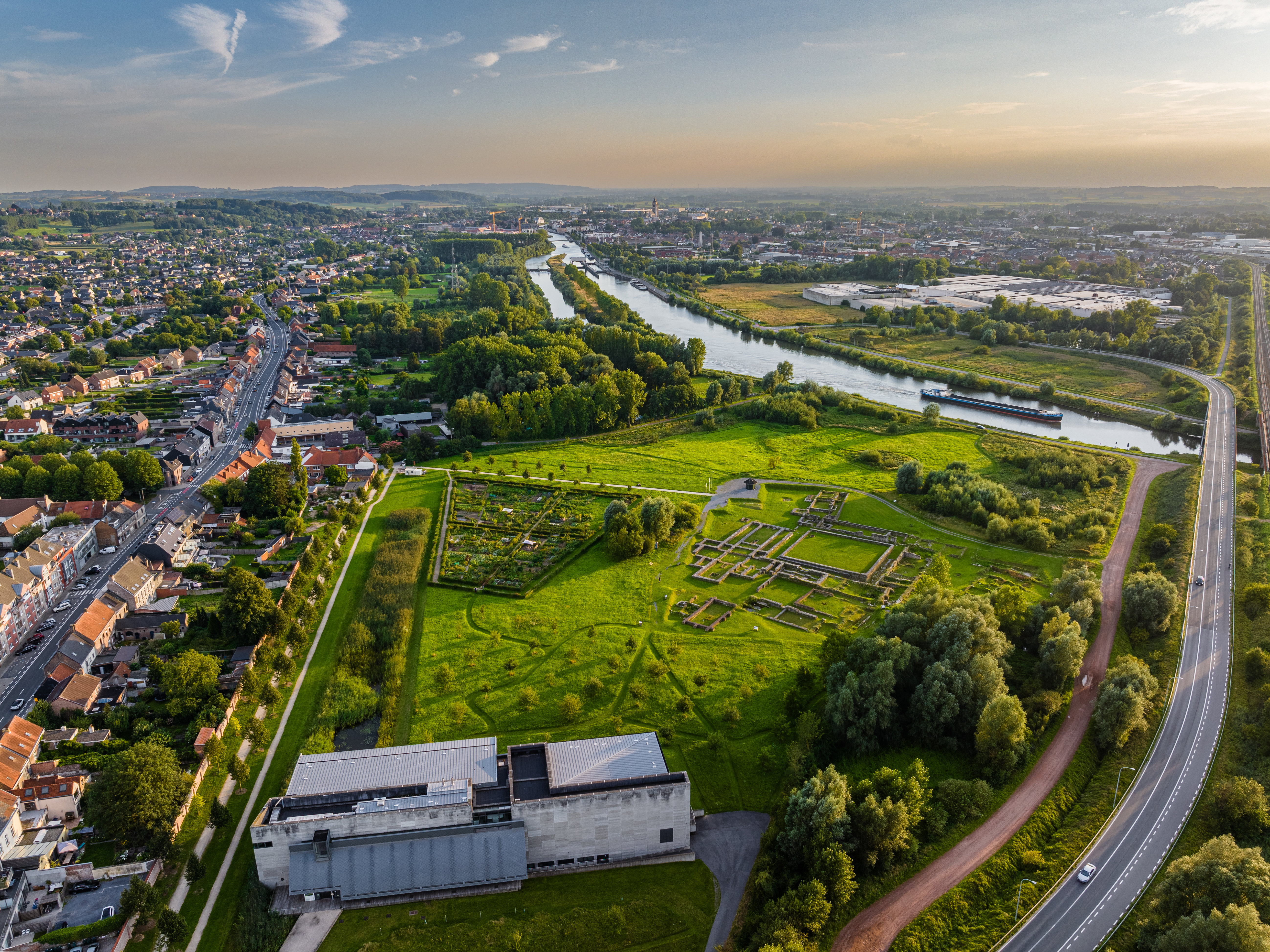
The Ename Repository temporarily stores immovable heritage from across the province of East Flanders, covering all 55 municipalities. This includes collections from historic buildings awaiting restoration, or interior elements and furnishings from churches undergoing repurposing. As part of the provincial heritage infrastructure, the repository benefits from close collaboration with other departments, including heritage consultants and preservation officers. These colleagues regularly inspect historic buildings and integrate the repository's functions — such as pest treatment and preventive conservation — into their advisory work. The repository also features Belgium's first anoxia chamber, operational since 2015, used for pest treatment of its internal and external collections.
In terms of archaeological archives, the repository permanently acquires and safeguards collections from 21 municipalities, thereby assuming full legal ownership and long-term responsibility for their care. The remaining 34 municipalities are served by four other accredited repositories, each managing the archaeological collections found within their respective regions. This stategic distribution of responsibilities ensures comprehensive coverage across the province and supports a balanced and efficient approach to heritage care. Public access to the storage facilities is carefully designed. While the storage rooms themselves are not freely accessible, visitors can view the repository through a transparent glass wall (Figure 3), creating the perception of stepping into the storage space. A dedicated visitor zone allows for alternating displays of selected objects, and guided tours are offered to small groups, often featuring items from their own towns or regions.
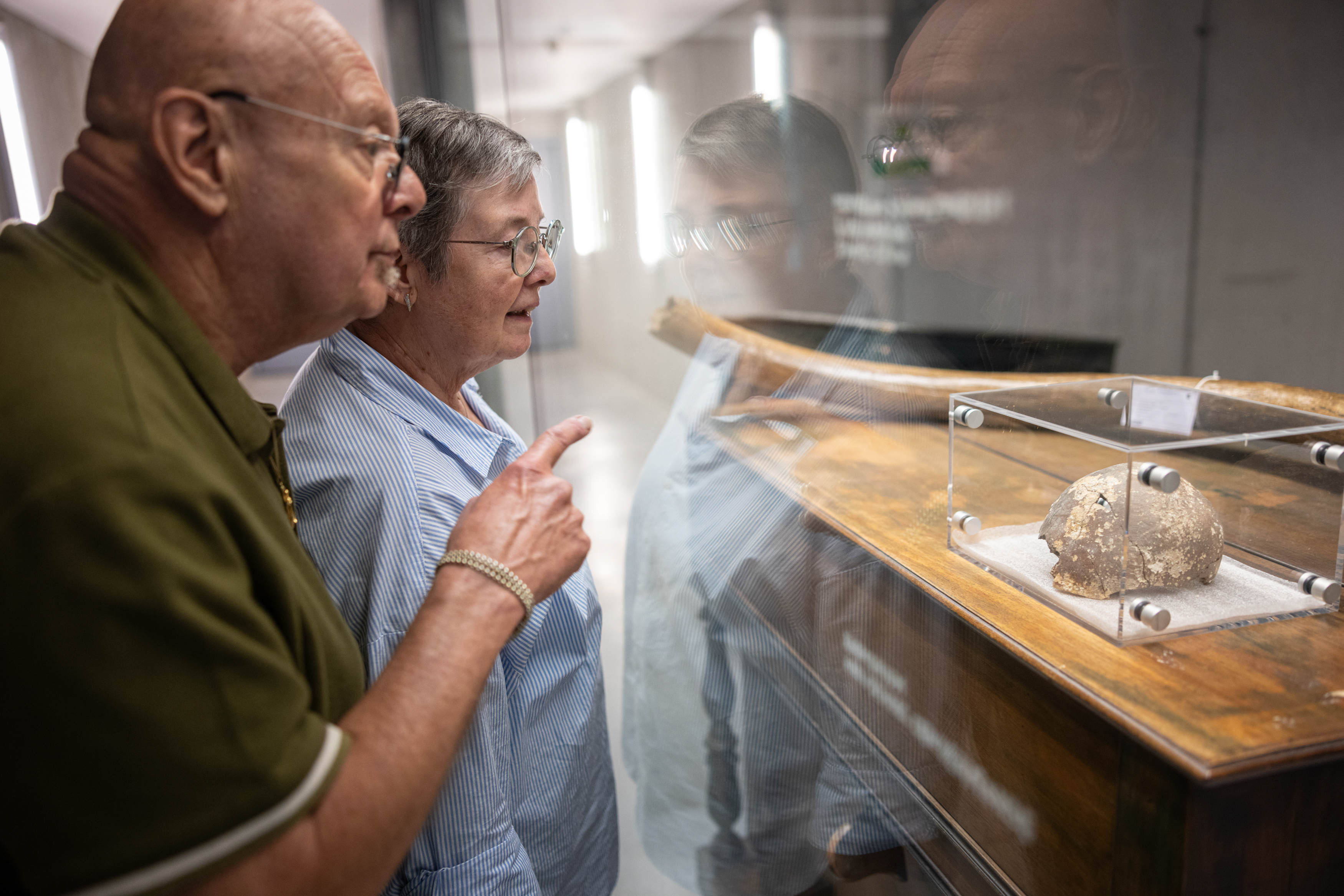
The Ename repository stands out, not only within Flanders but also internationally, as the only heritage repository known to have initiated a pioneering project dedicated to green heritage — a domain still largely neglected in mainstream heritage frameworks (Vandecatsye and Lombaert 2023).
The Heritage Trees Project focuses on the preservation and propagation of monumental trees (Figure 4) — specimens that have proven their resilience to local environmental conditions and climate change and often represent a century-old, native gene bank. These trees are living archives of ancient cultivars and varieties that are increasingly rare in contemporary landscapes. Furthermore, these trees, often centuries old, are deeply connected to local history, stories and community identities.
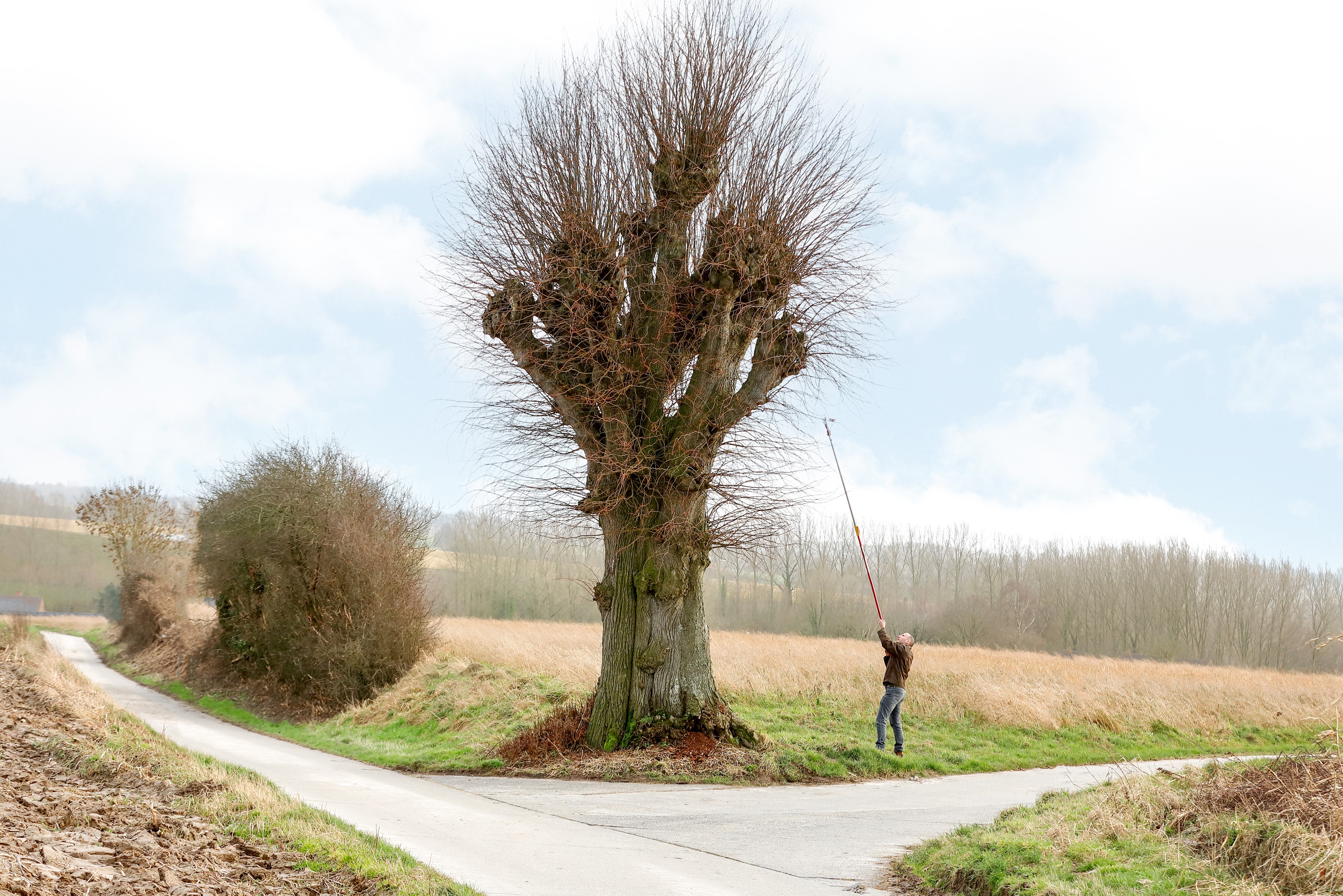
When a monumental tree dies, its genetic material is irrevocably lost. To counter this, the project propagates descendants through grafting, thereby safeguarding their genetic legacy and reviving their often iconic and unique local stories. The young grafts are grown adjacent to the repository workspaces, creating a verdant working environment that fosters both ecological awareness and staff well-being. Heritage site personnel actively participate in the care of these trees, watering them during breaks or moments of reflection, which strengthens communal bonds and embeds sustainability into daily operations.
The project's key innovation is applying collection management standards — typically reserved for museum objects — to these living specimens. Each tree's origin, condition, and eventual new location, is meticulously registered using a global positioning system device (GPS), with these data subsequently integrated into a geographic information system (GIS) database. This approach not only ensures the long-term traceability required for a future gene bank but also integrates these living assets fully into the institutional framework of heritage care. The reintroduction of grafted descendants occurs in three ways: replanting at their original heritage sites, distributing them to local communities (Figure 5), and establishing them in new sustainable locations across Flanders.
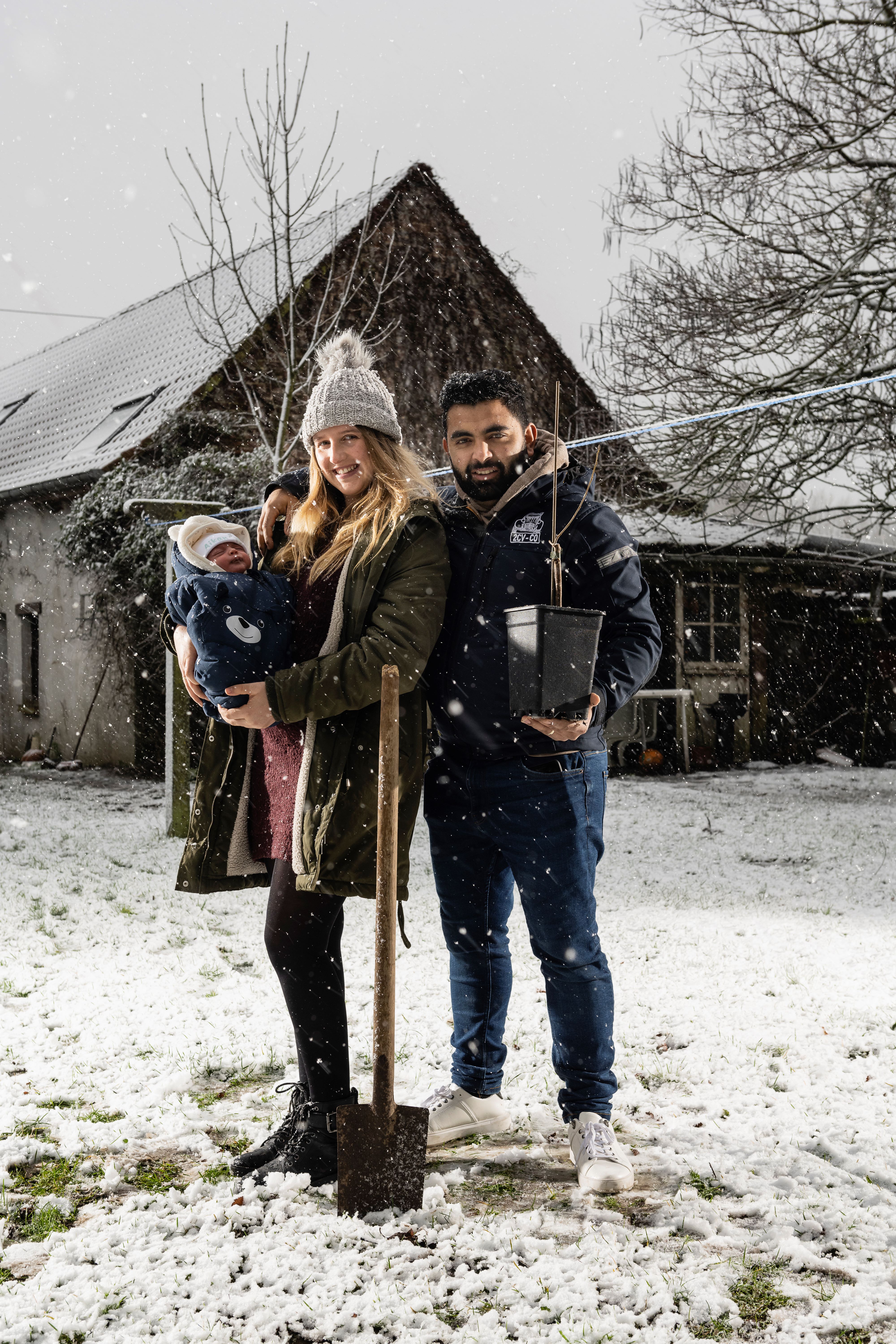
The project exemplifies how heritage institutions can contribute to climate resilience and biodiversity through active stewardship of living heritage. Moreover, the community engagement fostered around specific trees has served as a conceptual and emotional inspiration for the participatory outreach initiative Chalk the Past. Just as a tree roots itself in its environment, heritage becomes meaningful when it is rooted in the living experiences and collective memory of communities.
The innovative nature and interdisciplinary scope of The Heritage Trees Project have also garnered international recognition, winning a 2025 Europa Nostra Award in the Research category (Europa Nostra 2025; Figure 6). This distinction underscores the project's relevance not only within local and regional heritage practices, but also within broader European discourses on sustainability, biodiversity, and participatory heritage care. In addition to the main award, the project also received an honourable third place in the Public Choice category, demonstrating its ability to resonate emotionally with audiences across Europe and to translate scientific heritage work into widely shared social value.
Recognising the need at the Ename Heritage Site to reach beyond traditional audiences, a multifaceted public engagement strategy was implemented. The integration of the repository within the site ensures that heritage care is not isolated from public interaction. Exhibitions, educational programmes, and outreach initiatives are developed in synergy with the repository's functions, making Ename a model for how heritage care and public access can reinforce one another within the provincial framework.
The permanent exhibition at Ename Heritage Site offers a layered exploration of the relationship between people, heritage and landscapes. Designed to challenge conventional notions of heritage, the exhibition highlights its presence in everyday environments — from architectural remnants and landscape elements to personal objects and archaeological traces.
Using a combination of interactive technologies, hands-on models, and immersive storytelling, the exhibition invites visitors to decode the landscape as a historical archive. Relief maps, digital screens and tactile installations guide audiences through themes such as human adaptation to natural environments, archaeological methodology, and the hidden histories embedded in soil, architecture and landscapes.
A central feature is the integration of authentic objects from repositories across the province, including damaged artefacts that illustrate conservation challenges. These are presented in a custom-built cabinet (Figure 7) that also introduces research techniques versus deterioration processes. A screen provides magnified views of the damage, enhancing the understanding of conservation challenges. The exhibition circuit is physically and conceptually connected to the storage facilities, which are part of the visitor experience. Through transparent architectural design and interpretive tools, the repository is made visible and accessible, reinforcing the idea that heritage care and public engagement are mutually reinforcing.
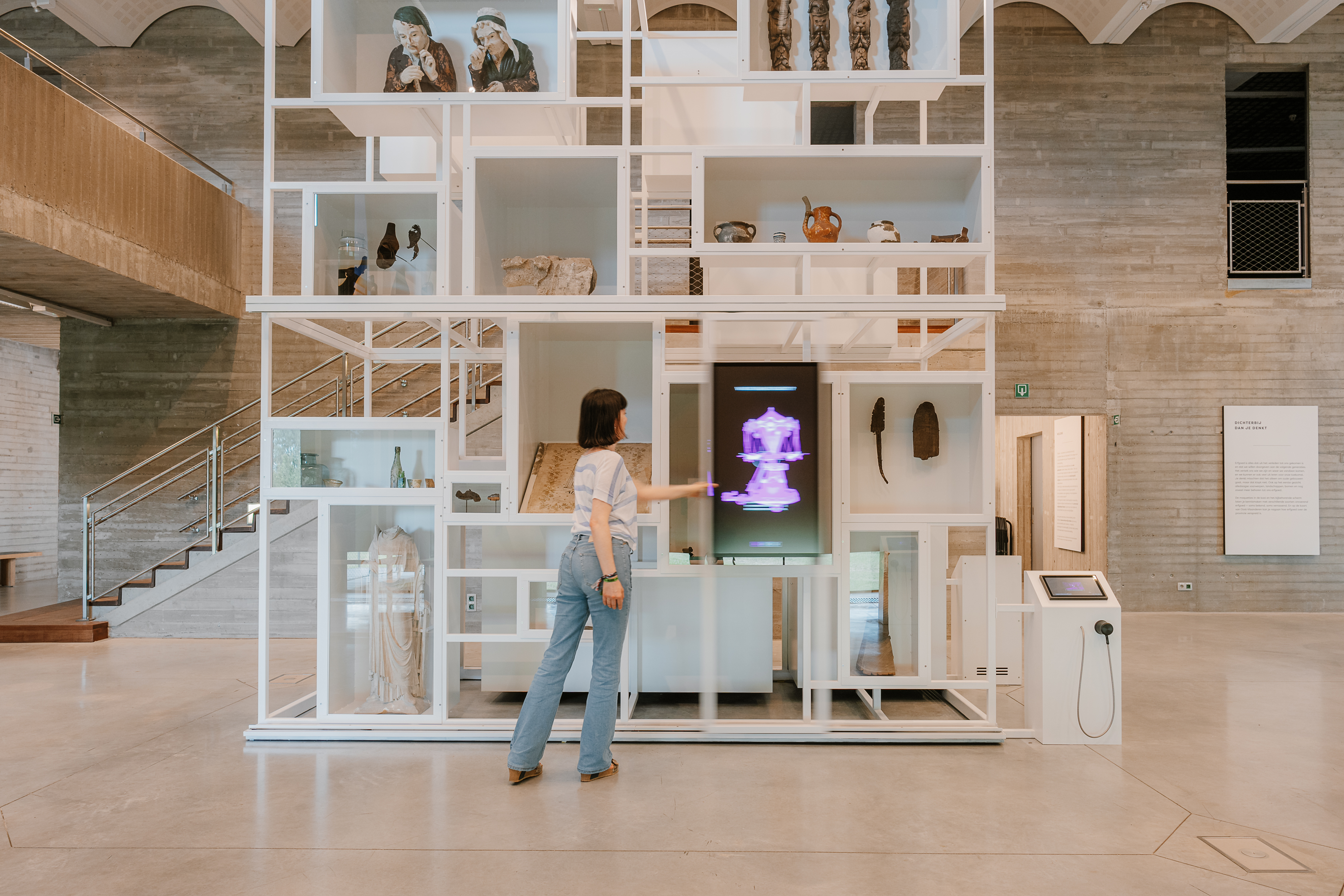
The second part of the exhibition focuses on the former castle and abbey of Ename, emphasising its historical entanglement with the landscape. A winding chronological timeline evokes the Scheldt river as a blue lifeline shaping the regional history from prehistory up till the present. Among the highlights is the oldest intact human skull excavated in Flanders, dating back 4000 years (Crombé et al. 2025). This discovery from the repository's collection was strategically unveiled, coinciding with the exhibition launch, drawing national media attention.
By combining material culture, landscape interpretation and participatory learning, the exhibition exemplifies how heritage can be brought to life as a dynamic and inclusive process — one that invites visitors to reflect on their own role in preserving the past for the future.
Public engagement at Ename Heritage Site is not limited to exhibitions — it extends into a diverse range of educational programmes tailored to both school groups and families. These initiatives are specifically designed to address the needs of diverse target groups, spanning primary school children, adolescents and young adults. They foster curiosity, critical thinking and emotional connection with heritage, often through immersive and narrative-driven formats.
One of the most prominent examples is the family trail Dossier EN.am.X (Figure 8) which is integrated into the permanent exhibition. Guided by a fictional archaeologist from the future, EN.am.X, children are invited to explore a world where heritage has disappeared. EN.am.X calls upon the children of today to help preserve traces of the past for future generations. As participants move through the trail, they engage multiple senses and solve challenges, often in collaboration with parents or grandparents. The experience culminates in a sandbox activity, where children leave symbolic traces of their own, reinforcing the idea of heritage as a shared and ongoing responsibility.
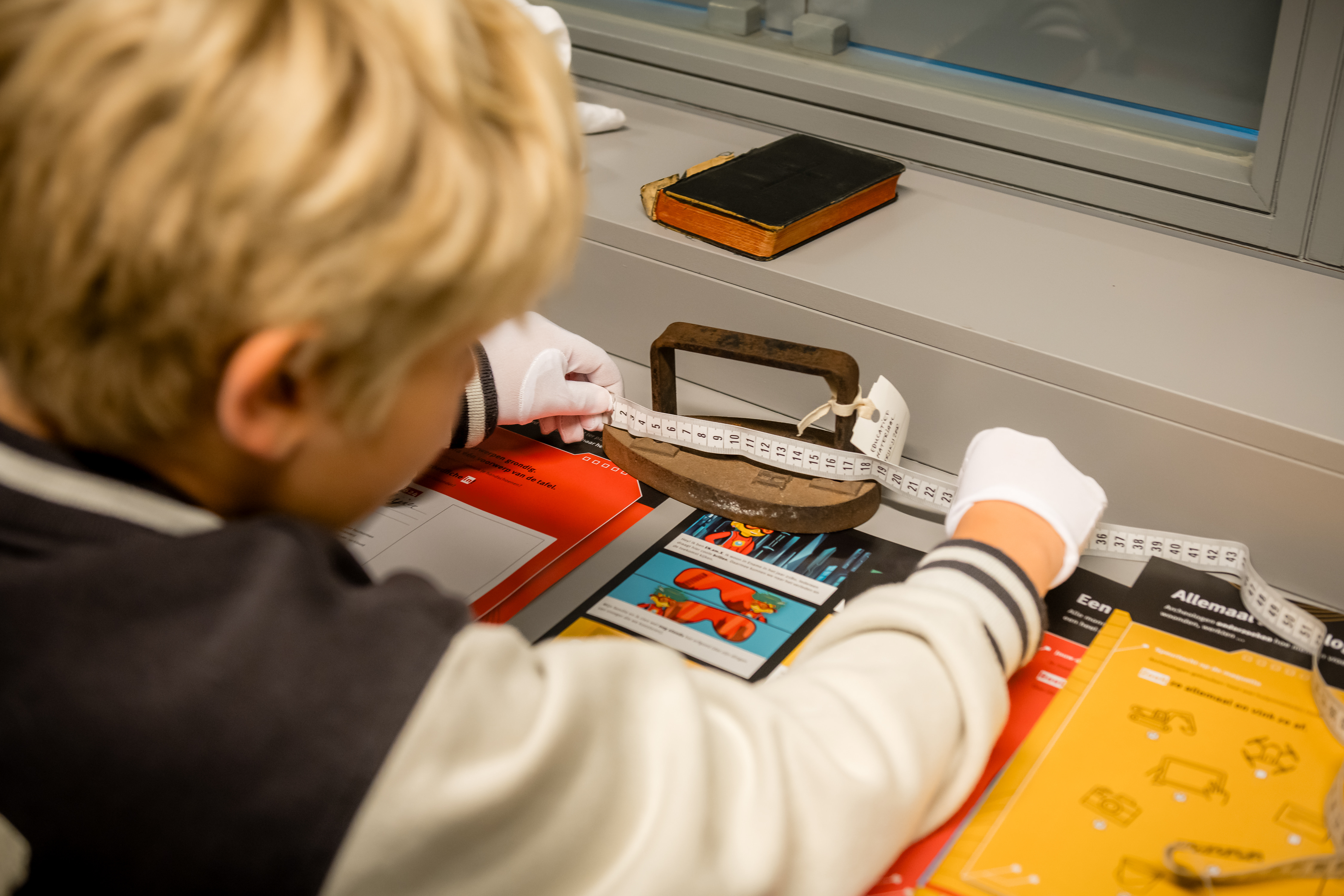
For school groups, the site offers Stanlie, an educational program built around a seven-step storyline. Each stage includes teacher-led activities, supported by a dedicated website that provides instructional materials and tools. Through Stanlie, children learn to identify heritage in their own surroundings and reflect on its significance. A key moment in the program involves a visit to the repository, where pupils must return a missing ancient marble without being noticed — reinforcing their role as stewards of heritage objects and, by extension, of cultural memory.
Teenagers and families can also participate in the Unravel Ancient Clues program , a thrilling digital and physical adventure across the heritage site and the village of Ename (Figure 9). Participants follow a mysterious figure who has lost all sense of identity and place. By deciphering clues in the landscape, interpreting a secret language, and knocking on the door of an 18th-century heritage house, they gradually uncover that the figure is none other than the abbot of the medieval Ename Abbey. This program blends historical narrative with interactive exploration, making heritage discovery both personal and memorable.
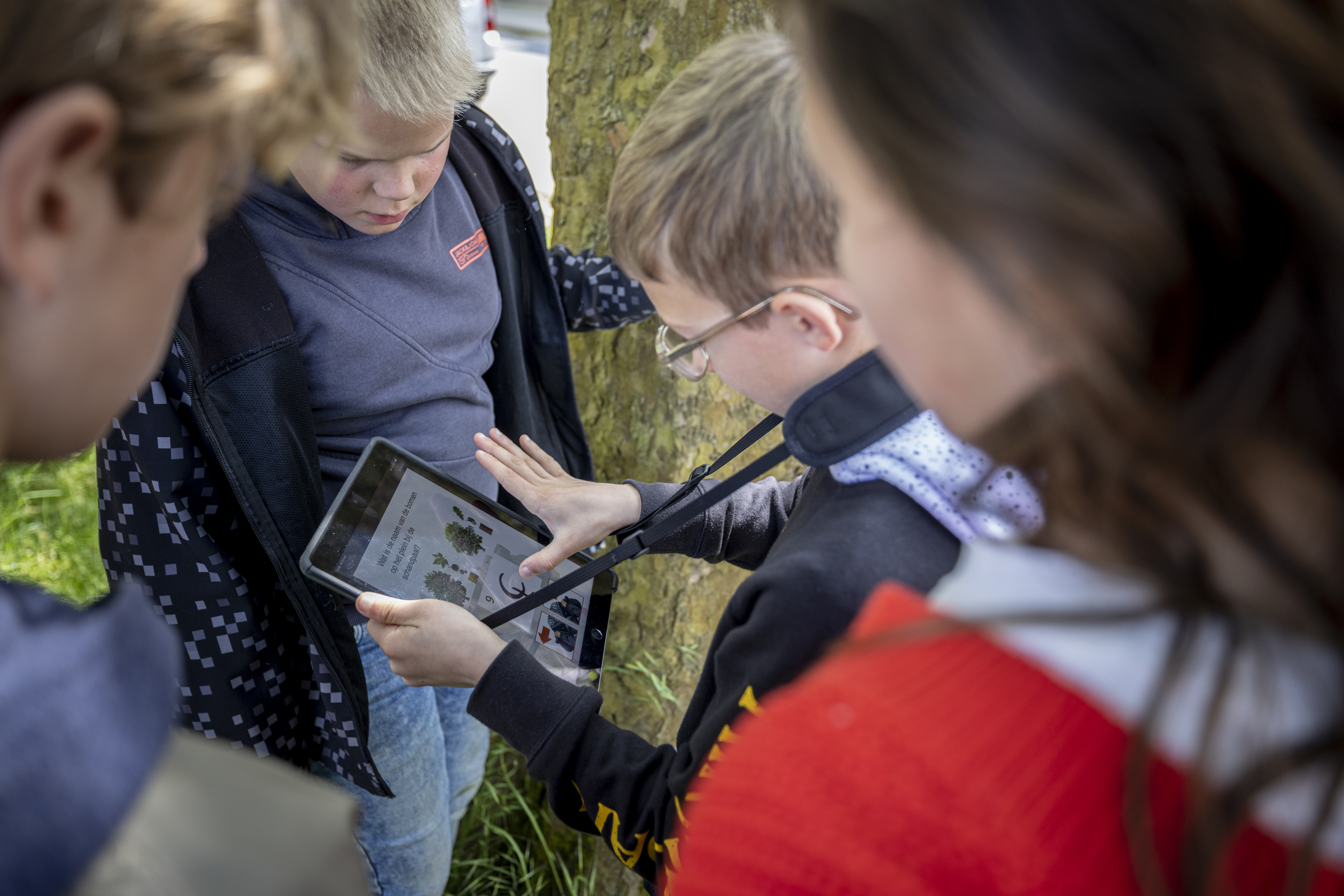
These educational initiatives exemplify how the Ename Heritage Site transforms passive observation into active participation, empowering visitors of all ages to engage with heritage as a living and evolving process.
Public engagement extends beyond the museum walls. The Heritage Site maintains a website with collection access, a Facebook page targeting local audiences, and uses targeted newsletters. Strategic communication has proven effective in amplifying visibility and impact. The site also participates in national initiatives such as Archaeology Days, and is currently expanding its inclusivity efforts through the three-year project 'Tourism for Autism: Come AUT & Play', aimed at improving accessibility for individuals with autism.
Public engagement at the Ename Heritage Site extends beyond the museum and repository buildings into the surrounding landscape, notably the Archeopark — a protected open-air archaeological site encompassing the excavated foundations of the Sint-Salvator Abbey, which played a central role in the village of Ename from 1063 until its dissolution in 1795. The site is both archaeologically and ecologically significant, situated within a designated nature reserve along the River Scheldt.
In recent years, the Province of East Flanders has committed substantial investments to safeguard the future of the Archeopark. Following decades of exposure to natural elements, the abbey's archaeological remains require consolidation and care. This conservation effort is being undertaken in tandem with a broader renewal strategy aimed at enhancing public accessibility and interpretive infrastructure. Alongside new, fully accessible, paths throughout the archaeological site and park, interactive wayfinding elements are currently being developed.
The renewal project is executed with explicit consideration for the site's ecological value and protected status. Measures are being implemented to support and enhance local biodiversity, including shelter for several endangered plant and bee species that have flourished on the archaeological ruins. This integrated approach reflects a growing recognition and valorisation of the interdependence between heritage conservation and environmental stewardship.
The renewed Archeopark is envisioned as a more inclusive and welcoming space for local residents, recreational visitors and amateur gardeners, offering improved access and interpretive experiences. This initiative exemplifies how landscape-based heritage interpretation can be embedded within long-term conservation planning, reinforcing the role of heritage sites as dynamic spaces of public engagement, ecological awareness and historical reflection. Furthermore, the Archeopark's renewal provides a unique function as a living laboratory for conservation science. Various types of soft capping and historically inspired mortar mixes will be used to establish best practices that both protect the archaeological remains and augment the site's biodiversity.
According to an extensive study about public engagement in archaeology (Danniau et al. 2020), accredited archaeological repositories in Flanders are ideally positioned to serve as regional hubs for public engagement and participatory archaeology. Their strong integration within the Flemish Repository Network and close ties to excavation services, heritage sites, and cultural institutions make them uniquely equipped to connect research and collections with communities. Public engagement in archaeology often faces the challenge of reaching audiences who do not actively seek out heritage experiences. The Ename repository has responded to this challenge through a series of inclusive and educational initiatives that bring archaeology directly to communities, making stored collections visible, tangible, and relevant.
Developed by FARO, the Flemish Institution for Cultural Heritage, the ErfgoedApp (FARO n.d.a; n.d.b) facilitates the exploration of heritage through multimedia formats. Users can interact with video material, game modules, photos, sound clips, augmented reality and other digital content. The Ename Heritage Site actively integrates this application into its educational programming, including the interactive trail Unravel Ancient Clues. The app also supports exhibition design, allowing curators to embed digital layers into physical displays, enhancing accessibility and engagement. The permanent exhibition has also been integrated into the ErfgoedApp, which will furthermore be employed in the new wayfinding system and gamification elements of the outdoor Archeopark.
Exhibition cabinets have proven to be effective tools for presenting archaeological collections in a mobile and modular format (Figure 10). Originating from a project in the province of Flemish Brabant, we augmented the concept of traditional cabinets to combine traditional artefact display with digital media. Fragile or deteriorated objects can be visualised through three-dimensional (3D) scans accessible via QR codes, while scale models help interpret spatial organisation and excavation contexts.
The primary mode of engagement is direct and tactile: visitors are invited to autonomously open the cabinet drawers, initiating their own journey of discovery. Audio clips add a narrative dimension, allowing objects to 'speak' to visitors. For example, a well might recount its age, excavation history and associated finds. These clips can be tailored to different audiences, offering simplified versions for children and more detailed content for adults. Public interaction is further encouraged through participatory elements, such as inviting visitors to help identify unknown objects via sticky notes and suggestion boxes.
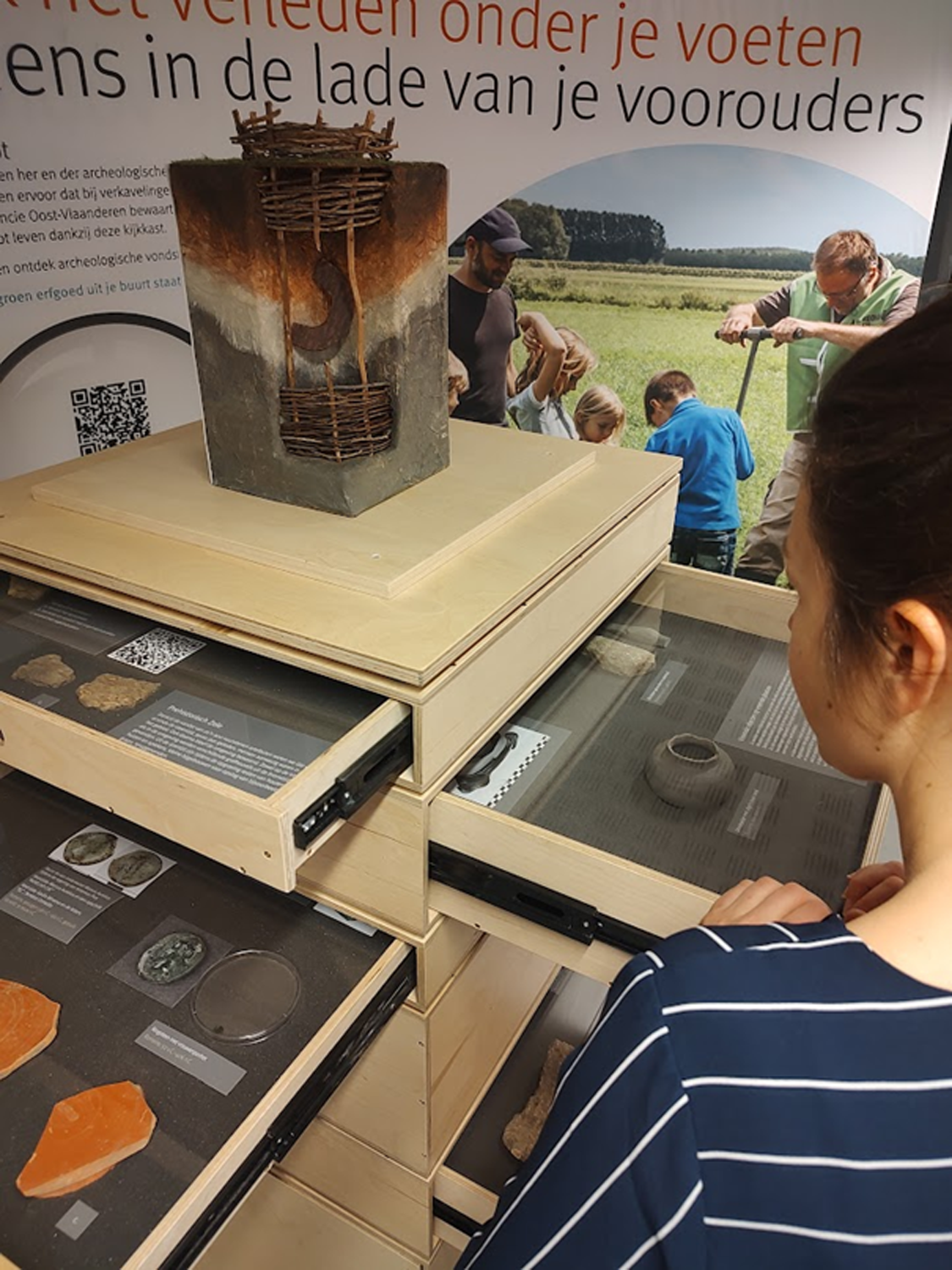
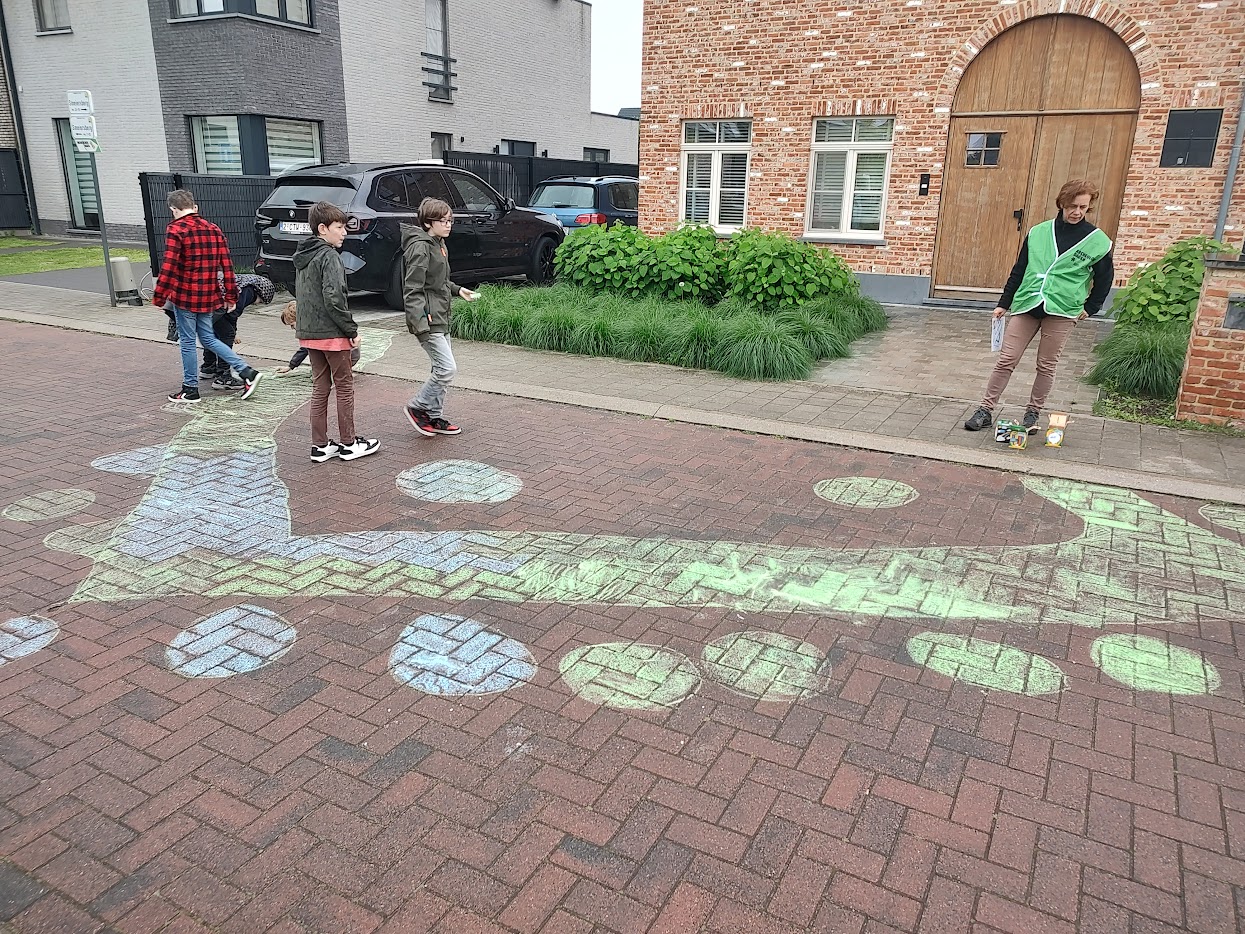
One of the most impactful and recent examples of participatory outreach is Chalk the Past, a project set to be implemented across at least four locations in 2026. Building on earlier experiments with mobile display cases and visual overlays of excavation sites, this initiative makes archaeological traces literally visible in the streets. By chalking outlines of ancient structures onto pavements and public spaces, the project reconnects current residents with the hidden and often forgotten histories beneath their feet.
A key element of the project is the physical reintroduction of archaeological finds from the repository into the communities where they were originally excavated. For each site, a custom-built display cabinet is assembled using scientifically documented finds, allowing the story of the local past to be told through tangible objects. For several weeks, these cabinets are placed in publicly accessible locations, such as libraries (Figure 11), town halls, community centres, and even churches, offering residents the opportunity to engage with their local heritage in an informal setting. Display cases like this also offer a powerful way to present new research and data from repository collections (Woodan Foundation 2023; Figure 12).
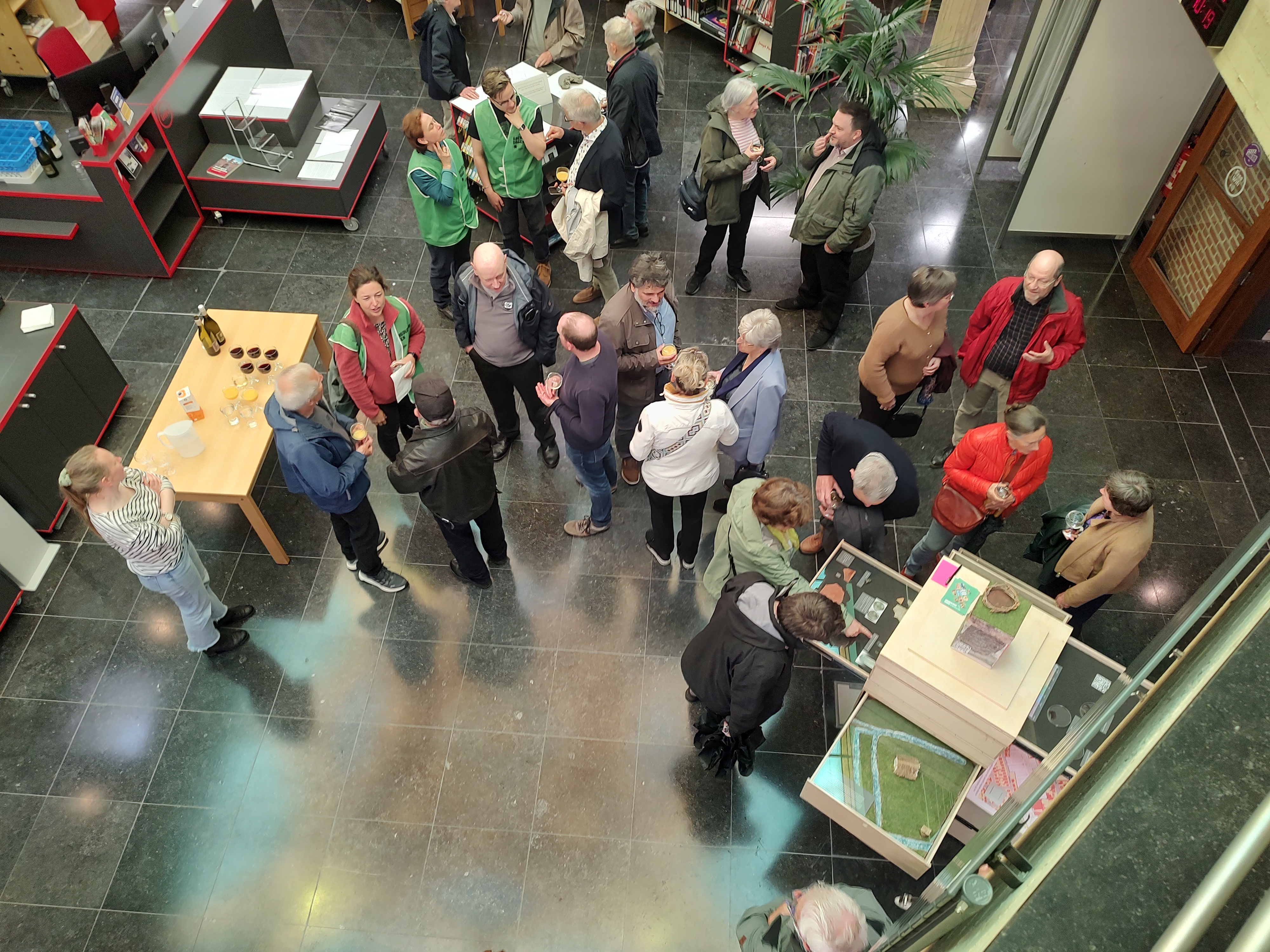
In addition, during the chalking events themselves, a selection of authentic finds is brought on-site. This allows new residents to physically connect with the former inhabitants of their neighbourhood by handling real artefacts. This tactile experience reinforces the emotional and historical link between past and present, and transforms abstract archaeological data into tangible heritage.
The initiative targets children and young people, with tailored activities for different age groups. Younger children engage in playful chalking and object exploration (Figure 13), while older students delve into archaeological methods and historical interpretation. Schools, youth organisations and families are actively involved, and special efforts are made to include children with disabilities.
Chalk the Past also employs a teach-the-teacher model, enabling local educators and heritage partners to replicate the approach independently. A digital guide and educational materials will be published to ensure long-term impact and scalability. The project is supported by all five accredited repositories in East Flanders and includes contributions from archaeologists, universities, municipalities and local heritage associations.
The implementation of the project in 2026 is being made possible through targeted funding from the Flemish Heritage Agency, which recognised the initiative's innovative and inclusive character. The jury praised the project for its strong participatory methodology, its potential for long-term impact, and its ability to connect communities with their archaeological heritage in a tangible and engaging way.
Beyond education, the project fosters community building and social cohesion. Residents participate in storytelling, guided tours, and the creation of permanent visual reminders — such as murals, information panels and digital reconstructions — ensuring that the archaeological past becomes a part of their daily living environment.
Chalk the Past is designed as a participatory outreach project that visualises archaeological traces and finds in public spaces. The methodology combines scientific accuracy with creative engagement, ensuring both educational value and community relevance. It follows a co-creative model, in which residents, educators and heritage professionals co-create the interpretive content and evaluate outcomes together (Figure 14). This approach not only disseminates archaeological knowledge but also tests new forms of community-based heritage management.
At least four locations were selected based on prior archaeological excavations and current residential development. Additional criteria included the diversity of finds, the representativeness of archaeological periods, and the potential for community engagement. Cartographic overlays were created to visualise historical features on contemporary maps (Figure 15). These were adapted for public display using lightboxes, chalk outlines and interpretive panels. Site selection was guided by a balance between scientific significance and social accessibility. Each chosen site functions as a case study to test how archaeological interpretation can strengthen local identity and foster a deeper sense of belonging. The process involves consultation with local authorities and community groups to ensure that interventions respond to local narratives rather than imposing external ones.
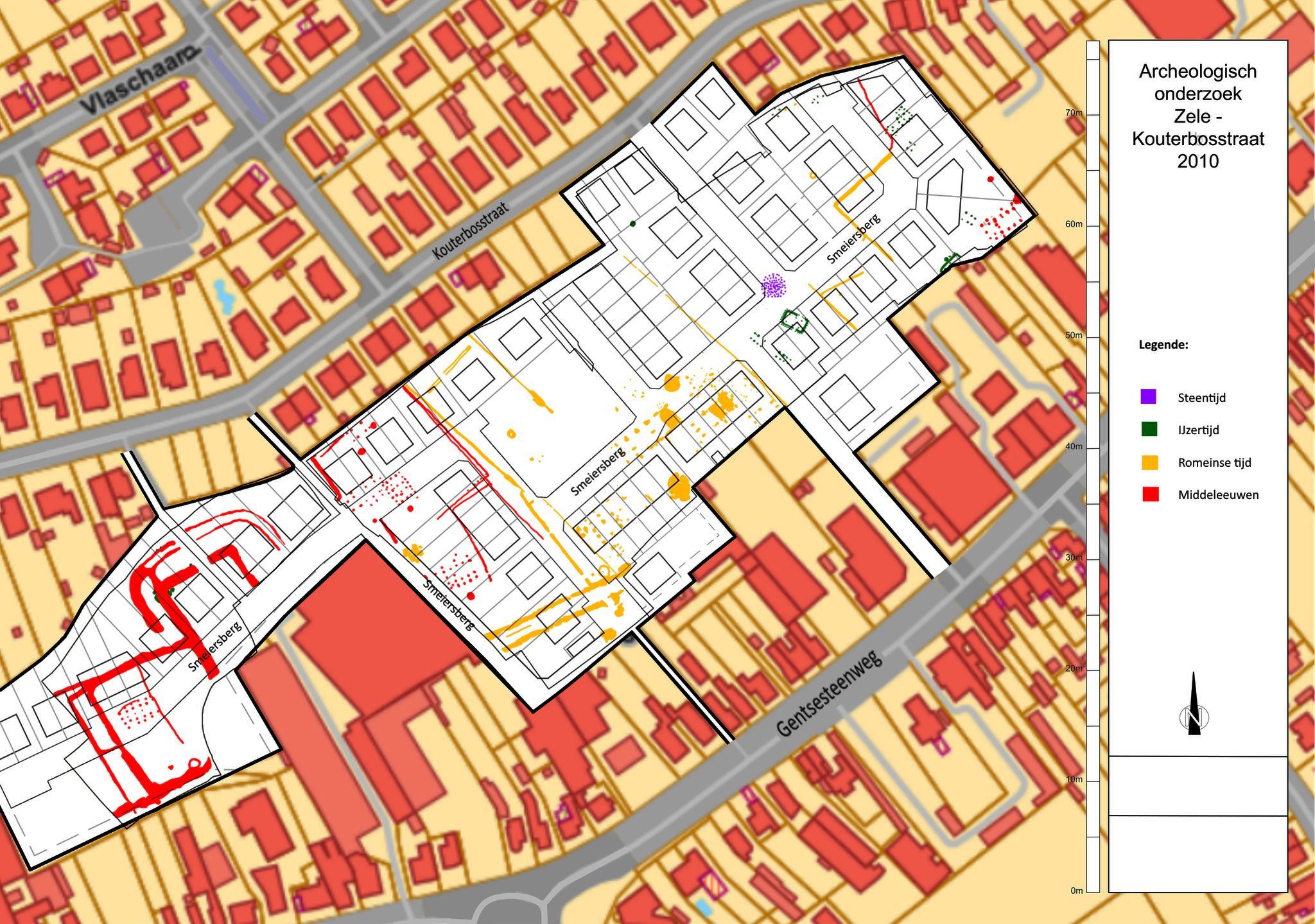
Local governments, schools, heritage associations, and the five accredited depots in East Flanders, are involved from the outset. A project coordinator facilitates collaboration, while dedicated staff members manage logistics and educational content. The project builds on existing networks and strengthens ties between professional heritage institutions and local communities. The funding from the Flemish Heritage Agency includes a salary for the project coordinator. This financial support enables the coordination of activities across multiple sites and ensures the integration of educational and participatory components.
Importantly, the project is designed to be scalable and adaptable. While the full programme involves multiple stakeholders and locations, the concept can be downscaled to a single site without requiring additional staff. In such cases, local heritage partners or educators can take the lead, making the project low-threshold and feasible for smaller communities or organisations with limited resources. This modular structure is a key methodological feature, allowing Chalk the Past to be replicated across regions while maintaining contextual specificity. Each implementation thus contributes data to a comparative framework that assesses how participation affects local heritage perception.
Activities are tailored to different age groups:
A teach-the-teacher model is implemented through workshops, enabling educators and local partners to replicate the project independently. A digital manual and educational toolkit are developed for long-term use.
Educational content is co-developed through iterative workshops that blend archaeological interpretation with local storytelling traditions. The emphasis on embodied learning — literally tracing the past with chalk — encourages multisensory understanding of heritage. Evaluation of learning outcomes relies on observation grids and post-activity reflection forms, aligning the project with contemporary museum education standards.
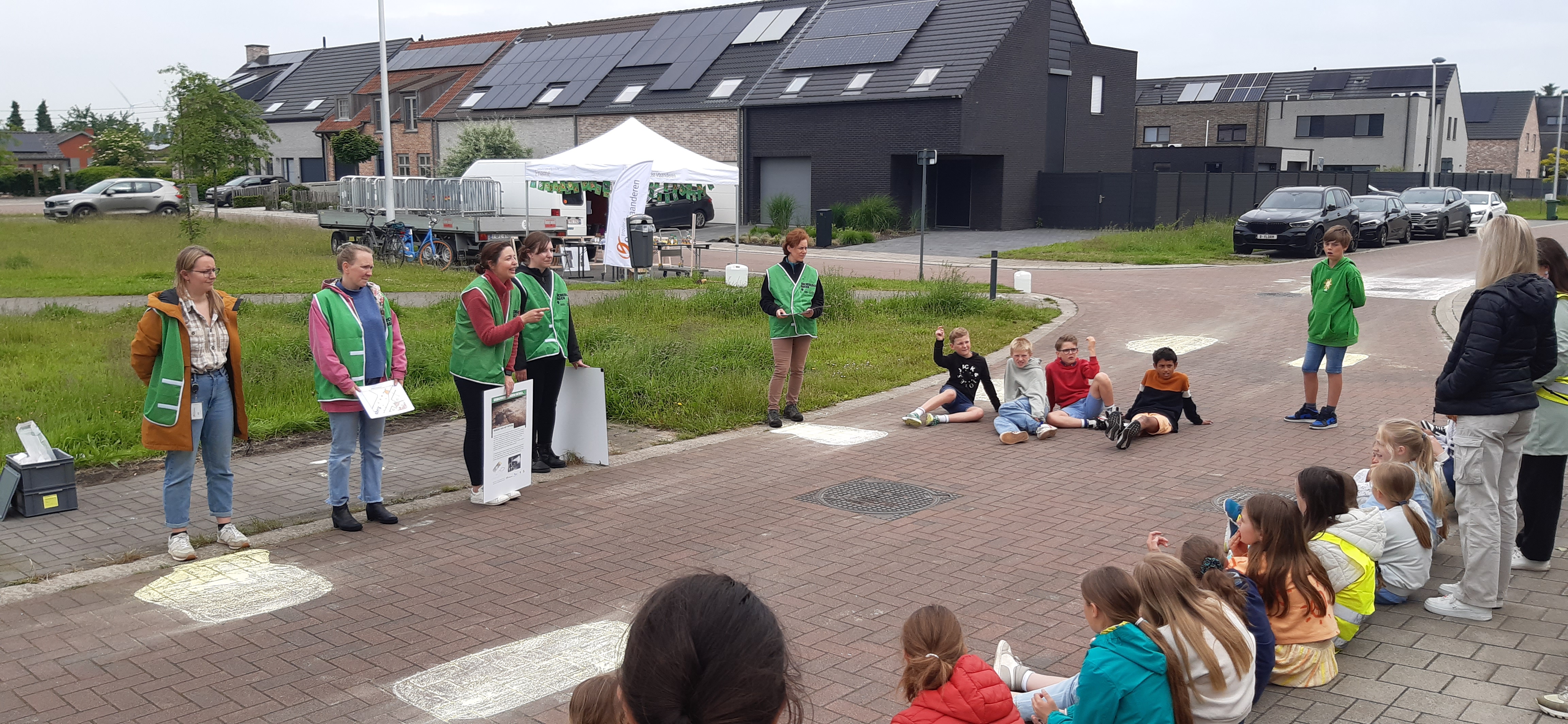
Each selected site hosts a public launch event, including guided tours, lectures by archaeologists and interactive exhibitions. Feedback is collected through surveys and informal interviews. The impact is assessed based on participation rates, media coverage and qualitative responses from residents and educators. The Zele pilot was linked to the national Archaeology Days to maximise visibility (Figure 16), which resulted in coverage by the national press (Teirlinck 2024).
The evaluation framework combines quantitative participation metrics with qualitative assessment of community engagement, emotional response and perceived ownership. This mixed-method approach allows the project to evolve through iterative learning cycles, refining both format and content for future editions.
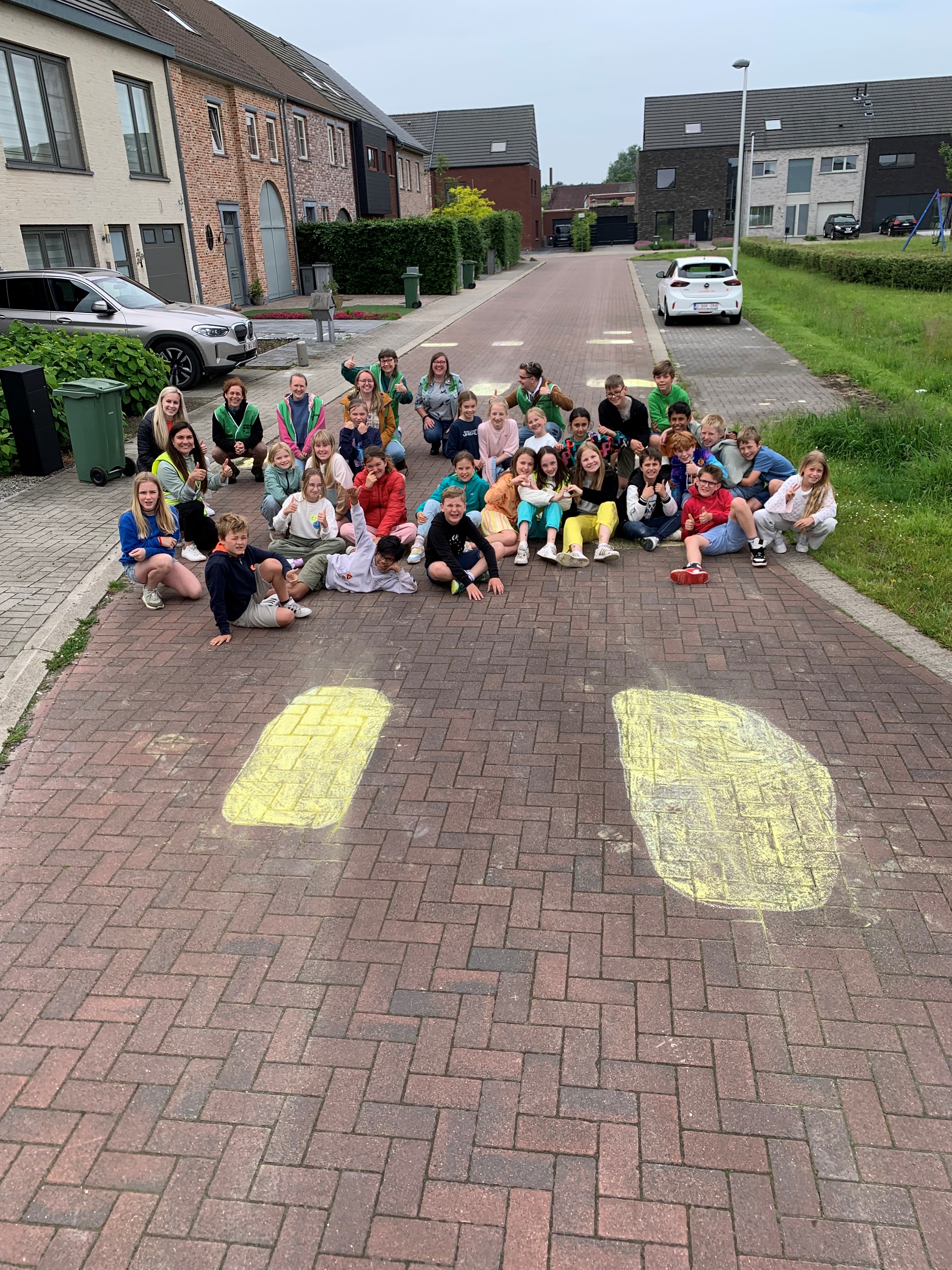
Chalk the Past exemplifies how archaeology can be reanimated for a broad public — not only as a scientific discipline but as a tool for community building, historical awareness and spatial identity. The project has received international recognition, with presentations at the International Council of Museums (ICOM) Conference on Museum Storage (Paris, 2024) and the 26th European Archaeological Council (EAC) Heritage Symposium (Gdansk, 2025), positioning it as a model for participatory heritage practice in Europe.
The Ename Heritage Site demonstrates how archaeological repositories can transcend their traditional role as custodians of heritage to become active agents of public engagement. Through a combination of permanent exhibitions, educational programmes, digital tools and participatory outreach, the site has developed a multifaceted strategy that connects people with the tangible and intangible traces of our past.
The project Chalk the Past exemplifies this approach (IOED Schelde-Durme 2024; Figure 17). By visualising archaeological features in public spaces and integrating authentic finds from the repository, the initiative reanimates stored collections and archaeological reports, embedding them in the living experience of contemporary communities. The project's participatory design — tailored to diverse age groups and inclusive of children with disabilities — ensures broad accessibility and relevance. Its teach-the-teacher model and digital toolkit will further guarantee long-term sustainability and replicability.
The project Chalk the Past has already proven to be inspiring and promising through a successful pilot conducted in 2024. In 2026, the initiative will be further developed across several selected sites, allowing for refinement of both its methodology and its collaborative framework. Supported by targeted funding from the Flemish Heritage Agency, the project will be coordinated by the Province of East Flanders in partnership with five accredited depots and a wide network of local stakeholders.
The concept is scalable and adaptable. While the upcoming multi-site implementation will benefit from a dedicated project coordinator, the model can also be downscaled to a single neighbourhood or school context — making it accessible without additional staffing. This flexibility ensures that Chalk the Past can spread organically to other communities and organisations eager to engage with archaeology in a participatory and locally embedded way.
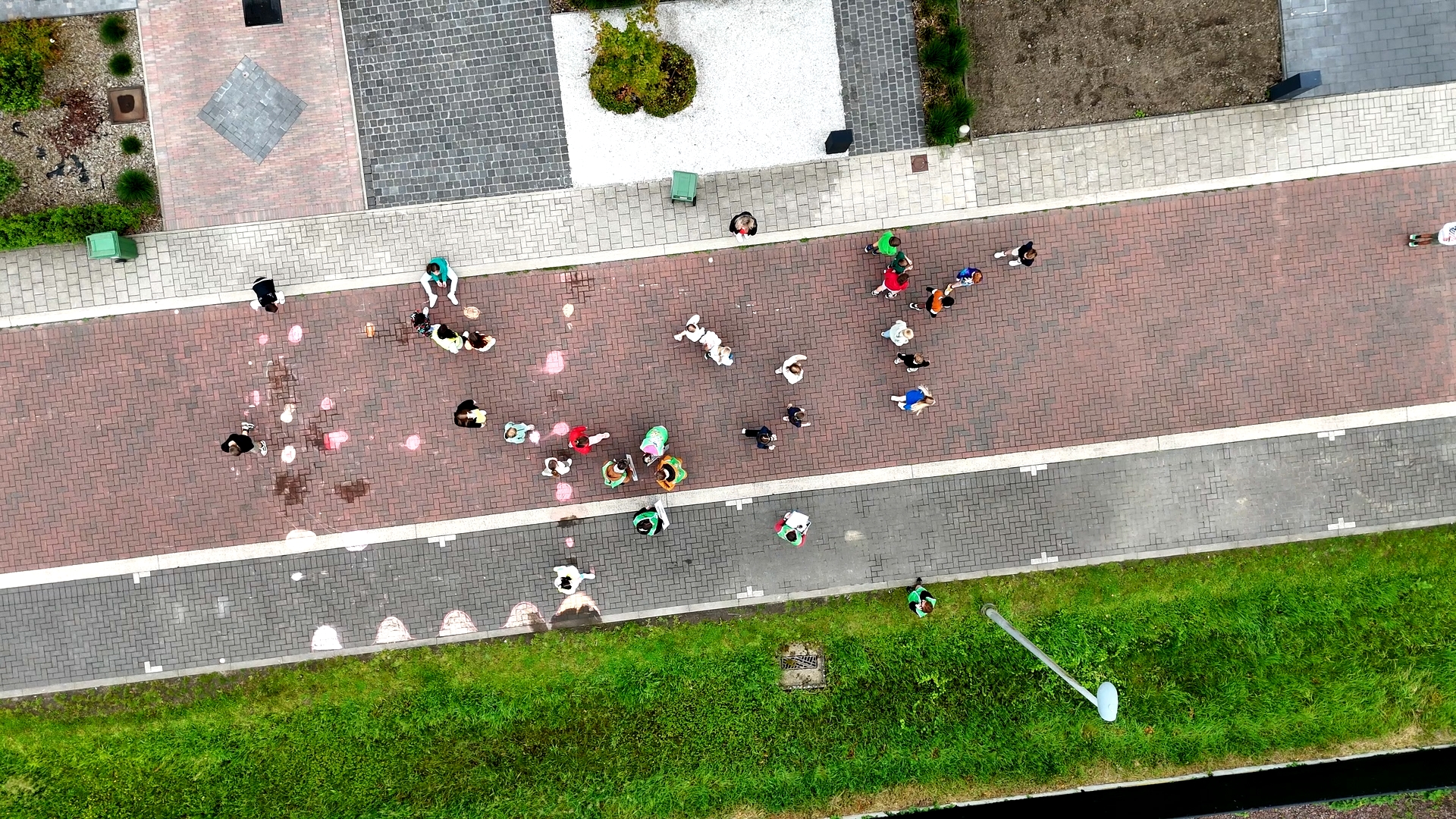
By bringing archaeology into the streets, schools and public spaces, the repository of the Ename Heritage Site repositions heritage as remnants of a shared past and a source of collective identity (Figure 18). The approach not only strengthens public understanding of archaeological processes and historical continuity, but also fosters social cohesion and local belonging. In doing so, it offers a compelling blueprint for how repositories can serve as catalysts for inclusive and sustainable heritage futures and practices.
Internet Archaeology is an open access journal based in the Department of Archaeology, University of York. Except where otherwise noted, content from this work may be used under the terms of the Creative Commons Attribution 3.0 (CC BY) Unported licence, which permits unrestricted use, distribution, and reproduction in any medium, provided that attribution to the author(s), the title of the work, the Internet Archaeology journal and the relevant URL/DOI are given.
Terms and Conditions | Legal Statements | Privacy Policy | Cookies Policy | Citing Internet Archaeology
Internet Archaeology content is preserved for the long term with the Archaeology Data Service (ROR). Help sustain and support open access publication by donating to our Open Access Archaeology Fund.
 Home
Home